FrontApril, and everything gets wet
What the water is actually for
The ritual is a cleansing. The street fight is an accident of history.
The core of it
Songkran falls in mid-April, on the Thai lunar calendar crossing the solar entry into Aries — a new year by two different reckonings at once. The word itself comes from Sanskrit sankranti, meaning the passage of the sun from one zodiacal house to the next. Every year on that passage, water is poured. What it is poured over, and in what order, is the point.
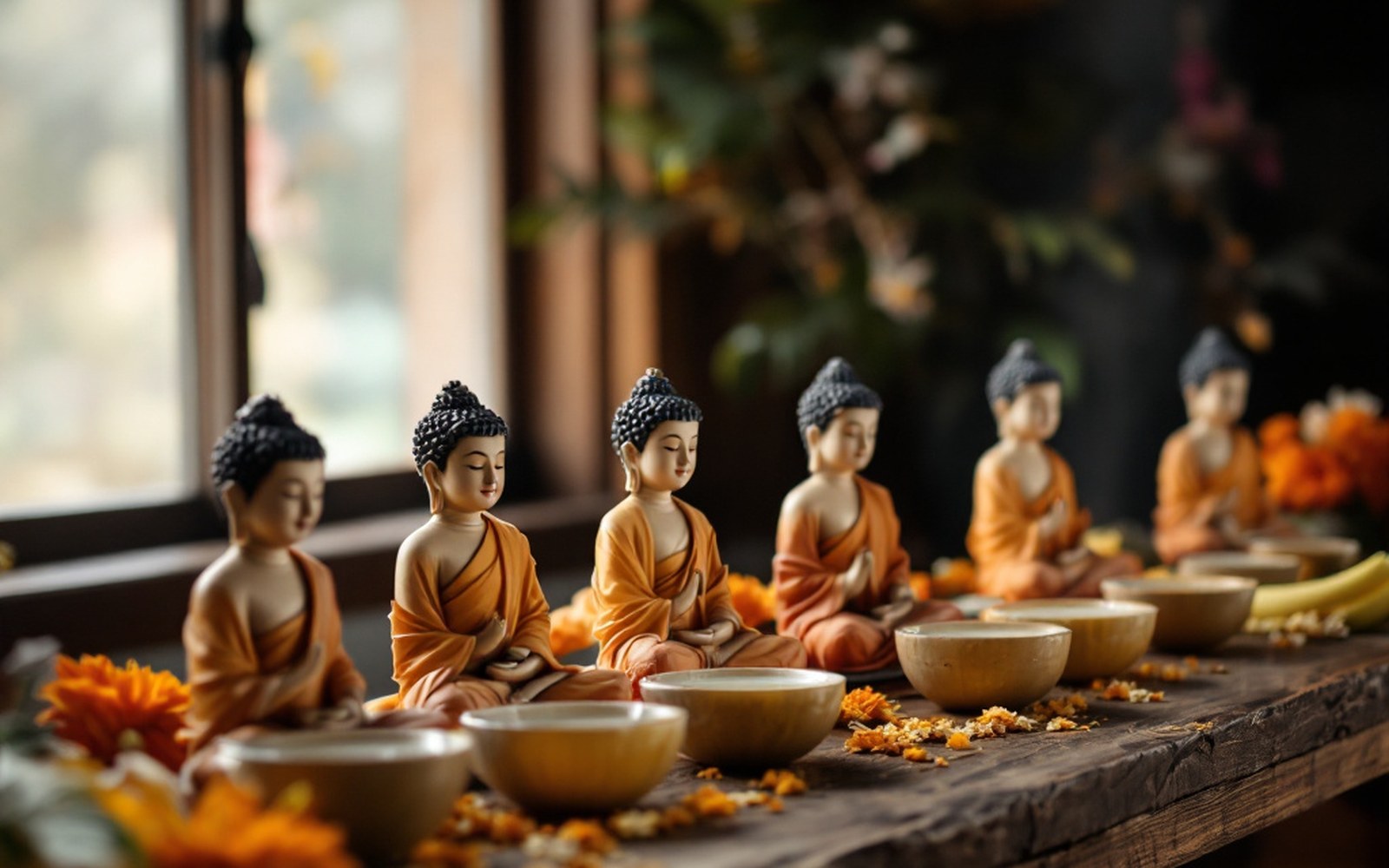
The first water goes over Buddha images. Temples bring the images outdoors or position them in special bathing structures, and the congregation ladles cool, sometimes lightly scented water over them from a ceremonial bowl. The act is a formal cleansing — impurities, conceptual as much as physical, are washed away at the turn of the year. The water that runs off a consecrated image is then collected, because it is considered to carry merit and blessing, and it is this water — not fresh water from a tap — that will be sprinkled on the hands and sometimes the heads of the elderly.
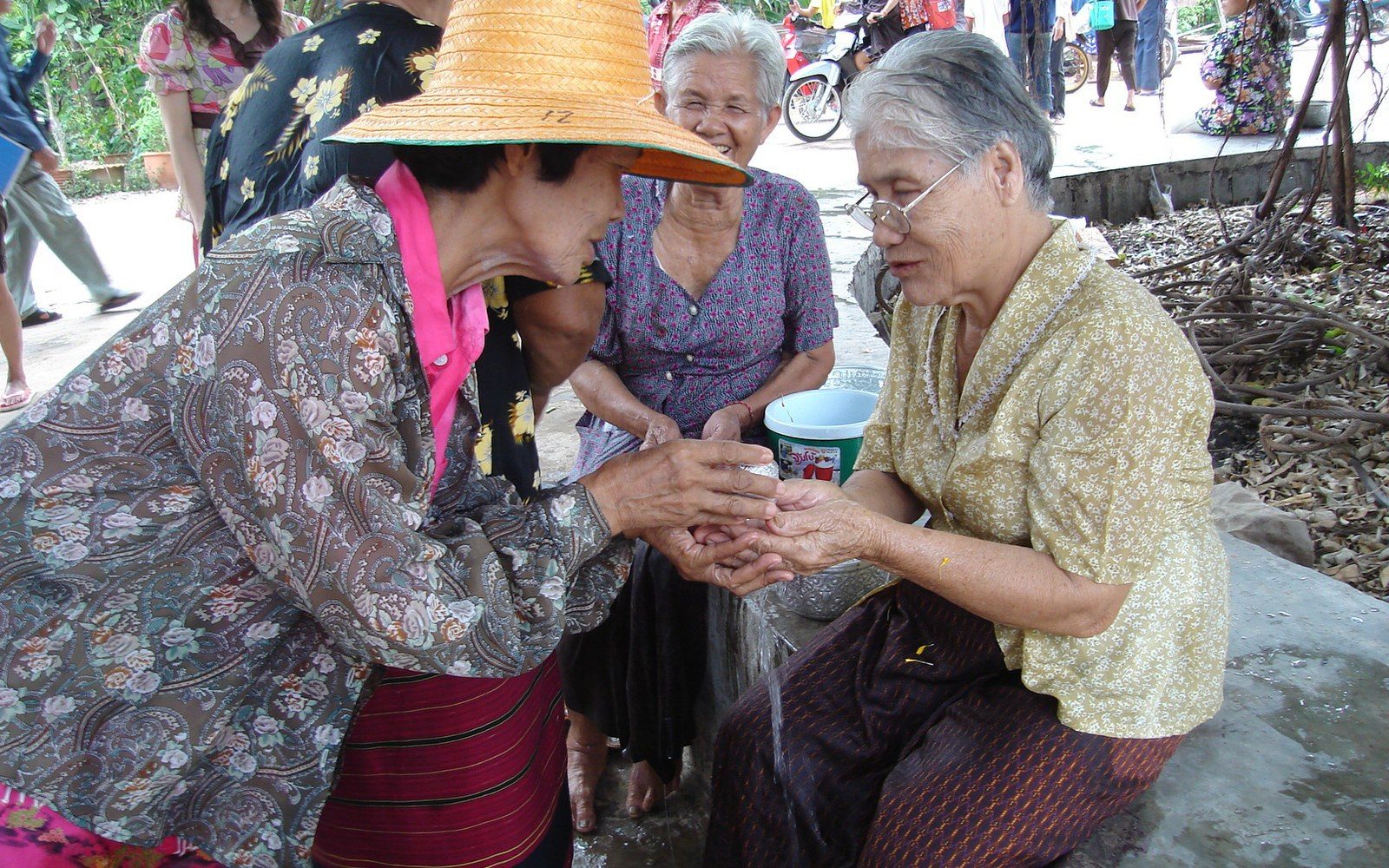
That second act is the one that most non-Thai observers never see, because it happens inside homes and temple halls rather than in the street. Younger members of a family approach their elders, pour a little water over the backs of the hands, and offer garlands or small gifts. Across the whole exchange, something is being asked: forgiveness for any wrongs in the year past, and the transmission of blessing from the elder to the younger. In Thai this is rot nam dam hua — literally, pouring water over the head of the respected person. The phrasing acknowledges the direction of the merit as clearly as the direction of the water: downward from age, upward in return of respect.
How the soaking grew
The jump from a ritual pour to a full street drenching is not a corruption of the observance. It followed a logic of its own, one rooted in the climate and the agricultural calendar. Mid-April in Thailand is deep dry season, the hottest stretch of the year. Water in that heat is relief, generosity, and something close to prayer — the monsoon is still weeks away, and the act of throwing water carries a wish for rain as much as a gesture of goodwill. Historical accounts of Songkran from the Ayutthaya period already describe festive water-throwing in the streets alongside the temple ceremonies, so the two registers of the festival — the solemn and the raucous — have coexisted for centuries.
What changed in the twentieth century was scale. Cities grew, and with them the zones where Songkran street-parties could gather mass. In Chiang Mai the moat road around the old city became the spine of a water battle that drew visitors from across the country and, eventually, from abroad. In Bangkok the commercial amplification was different — louder, faster, more compressed — but the mechanism was the same: a ritual occasion that had always had a playful element found a modern infrastructure built around that element. The merit-making at the temple and the soaking in the street are not separate events that happen to share a date; they have always been two registers of the same festival, the sacred and the convivial, each understood to need the other.
What gets lost in translation
When Songkran travels, the container sometimes arrives without the contents. In Vancouver the observance is held at a temple in the Lower Mainland and through community events across Richmond and Surrey, and people who grew up with the full sequence — early morning merit-making, image bathing, the formal water-pouring over elders' hands, the communal meal, the afternoon street play — tend to read a scaled-down diaspora version as better than nothing, which it is. But the water in the street only makes complete sense if you know what happened at the temple first.
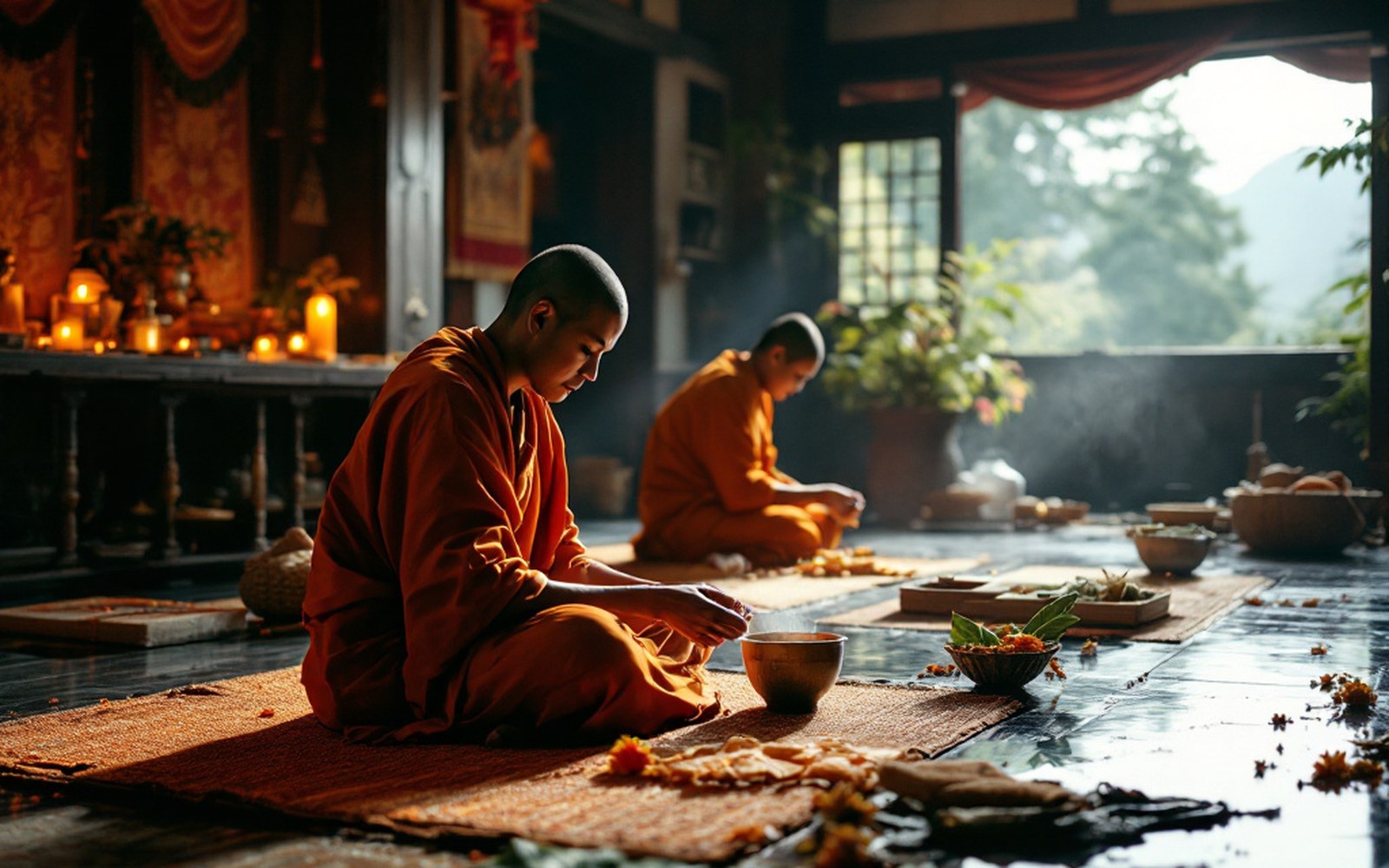
The image bathing is where the year's cleansing is concentrated. Uposatha days and the major festivals are built on the understanding that merit is not automatic — it is generated through specific acts, at specific times, in specific sequence. Pouring water over a Buddha image during Songkran is one of those acts. The water that touches the sacred image acquires a charge that plain tap water does not carry, which is why the water running off the image is saved. When it is later used on an elder's hands, the gesture carries both the family's respect and the image's blessing: two sources of merit arriving at once.
The scent matters too. Jasmine water, or water infused with pandanus leaf, is traditional in the image-bathing; the fragrance is itself a form of offering. Some families still add a few flowers to the water used for the elder-hand ritual. In a Vancouver home kitchen in April, where pandanus is harder to find than makrut lime, the gesture is approximated rather than exactly replicated — but the meaning the family is reaching for is unchanged.
The direction the water moves
What the soaking version of Songkran makes invisible is the hierarchy that structures the ritual one. Water moves from the young toward the old, from the congregation toward the sacred image. It is an act of service, and service in this context is a vehicle for the merit that flows back in the other direction. This is not unusual in Theravada Buddhism — dana, the act of giving, is the foundational merit-making practice, and pouring water at Songkran is dana in a specific ritual key.
The festival falls inside a Thai civic new year, and Thai law designates the 13th to 15th of April as public holidays, though most of Thailand treats the surrounding days as part of the observance too. The National Heritage Department of Thailand has worked to document the ritual elements of Songkran as distinct from its popular-festive expression, and UNESCO inscribed the festival on its Representative List of the Intangible Cultural Heritage of Humanity in 2023 — an inscription that explicitly includes both the sacred and the celebratory as components of the same living tradition.
That inscription matters here. It is a recognition that the soaking and the ceremony are not in competition. The water fight did not dilute the ritual. The ritual is what the water fight is anchored to — and knowing that, the bucket in the street starts to look less like a party and more like a very wet form of new year prayer.
More in April, and everything gets wet