FrontKhao Phansa, and staying put
The candle that is carried
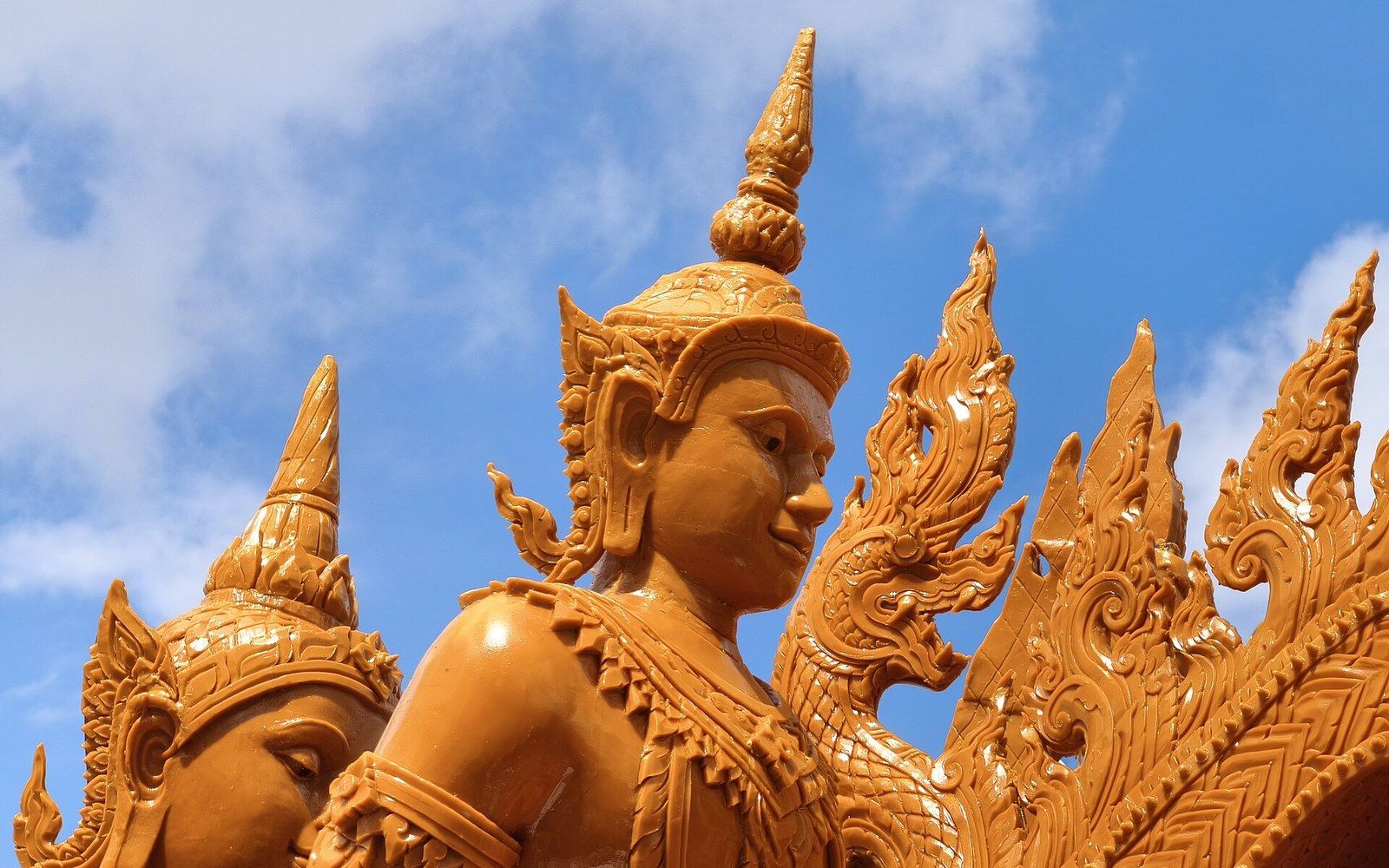
At the start of Khao Phansa, temples across Thailand receive an enormous beeswax candle — enough, in the old telling, to burn for the three months the retreat lasts.
What the procession is
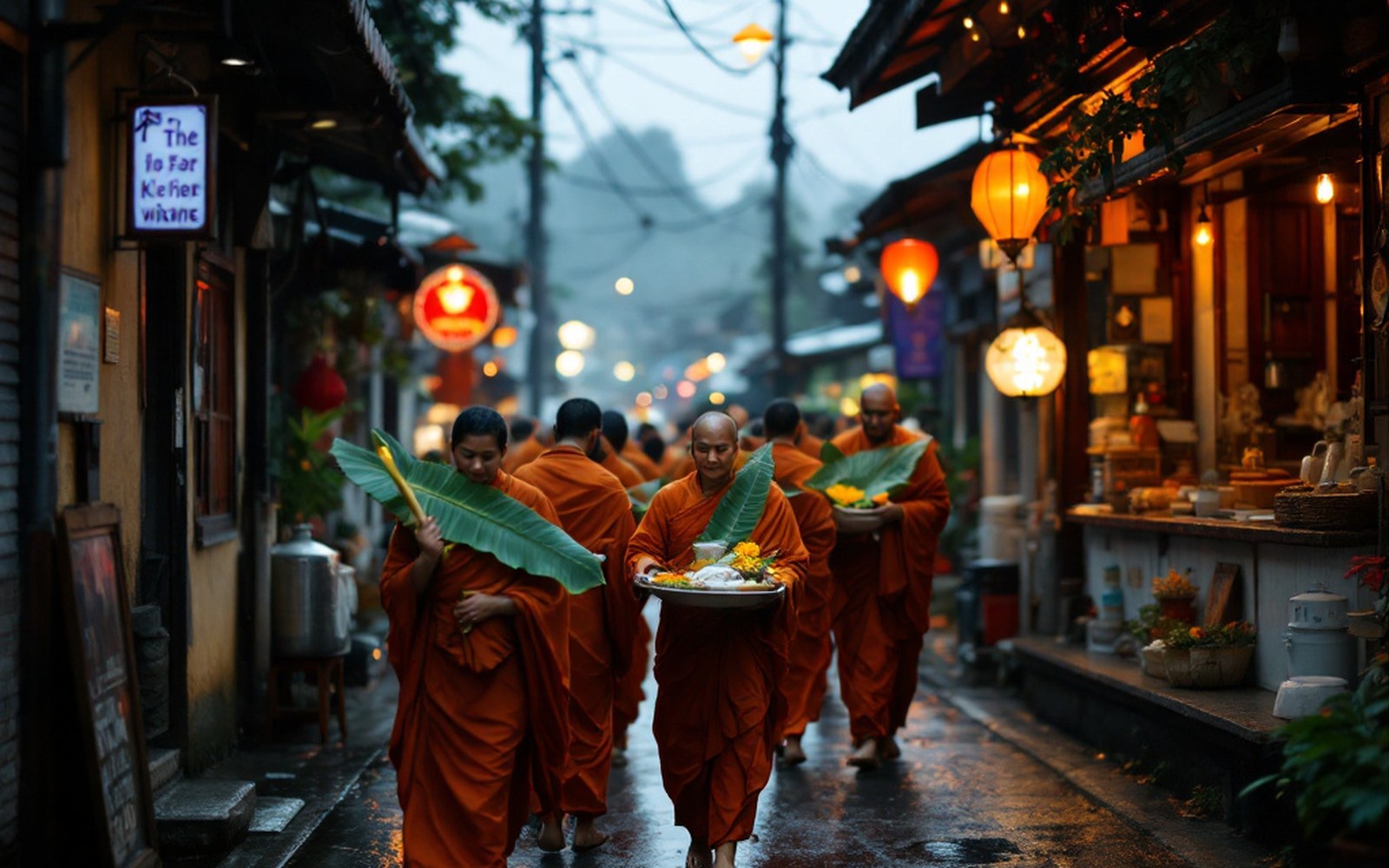
Khao Phansa — the start of the rains retreat, falling on the first day of the waning moon of the eighth lunar month — is marked in many parts of Thailand by a candle-bearing procession before dawn or in the early evening. Communities, schoolchildren, local officials and lay devotees carry smaller votive candles alongside a large central candle, often intricately carved into temple architecture, mythological figures or lotus blooms, to the wat (temple). The central candle is then installed near the ordination hall or a principal shrine and lit. Its flame, in intention, should not go out until Ok Phansa, the retreat's end three months later.
The practice is most elaborate in Ubon Ratchathani, a city in Isan whose annual candle festival has been documented since at least the early twentieth century and is now among the largest in the country. Ubon's processions involve carved beeswax towers taller than a room, mounted on decorated floats, and competitions judged on sculptural technique. Nakhon Ratchasima, Nakhon Phanom and Sakon Nakhon hold their own versions; the north and central regions observe the opening of the retreat with candle-giving too, though the scale and character differ. The festival reflects Isan's strongly Lao-influenced Theravada culture, and the carving traditions draw on Buddhist iconography that can be traced through the region's temple murals.
What the candle is for once it arrives
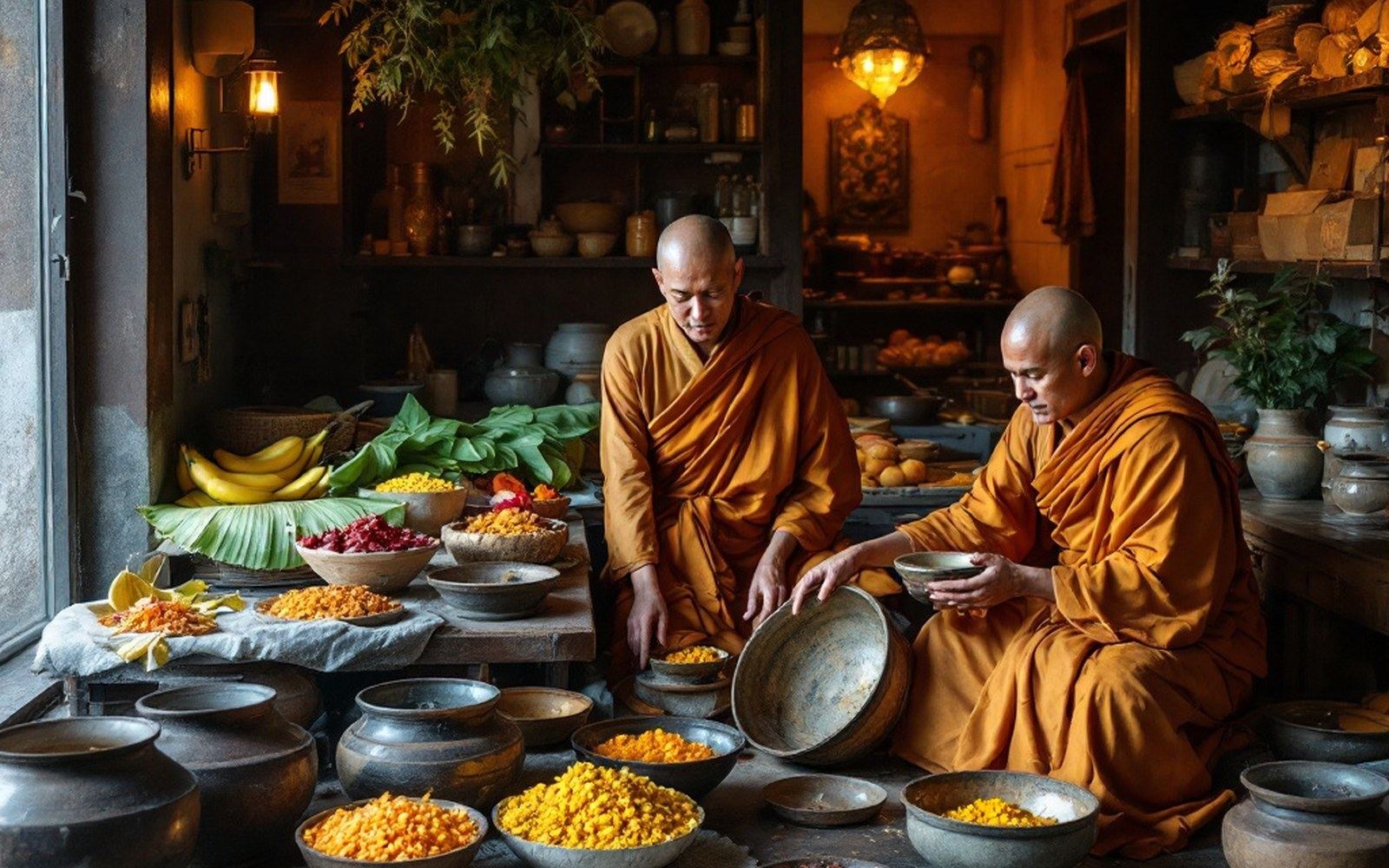
The logic of the candle is straightforward. Before electricity reached rural Thailand, a burning candle was a practical gift to a monastery beginning a period of intensified study and nightly chanting. Three months of oil or wax was a substantial offering. That utility is long gone from most temples, but the observance carries the gesture forward: the candle is a lay gift to a community that is, for the retreat, stationary — the monks and novices do not travel, do not leave overnight, and depend more directly on lay support for that period than at any other time of the year.
Inside the temple, the candle placed at the shrine does real symbolic work. It marks the passage from the ordinary calendar into retreat time. The flame lit at the opening ceremony corresponds to the uposatha rhythm the monks will keep for the next three months — the fortnightly gatherings, the recitation of the Patimokkha (the monastic code), the intensified practice that Khao Phansa frames. Some temples in Thailand keep a smaller candle burning through each uposatha day specifically, replaced as needed; the large Khao Phansa candle is the ancestor of that practice.
Theravada Buddhism's Pali canon gives the retreat's origin as a ruling by the Buddha after lay people complained that wandering monks were damaging crops and insects during the monsoon growing season. The three-month stay is, at root, an agricultural courtesy that became a spiritual structure. The candle, given at the start, is the lay community's acknowledgement that the structure is beginning and that they will support it.
How the candle travels here
In Vancouver, no procession moves through streets at dusk carrying a beeswax tower. The Thai community is small, the temple in the Lower Mainland holds the retreat internally, and Khao Phansa is observed rather than paraded. What arrives at the shrine on that first day is a candle of ordinary size, given by the lay congregation — the same gesture, stripped to its core. Some families bring candles from home; some are provided at the temple. The carving traditions of Ubon Ratchathani, documented in the Thai government's own intangible-heritage records, arrive only in photographs people carry in memory and show to children who have not yet been back.
The candle still means the same thing. The retreat has started. The flame is there to outlast it.
More in Khao Phansa, and staying put