FrontApril, and everything gets wet
The August festival, and why it is not the new year
The confusion is understandable: there is water, there are crowds, and somebody is getting wet. But the observance is not Songkran, and the calendar reason for it has nothing to do with the new year.
What is actually being kept
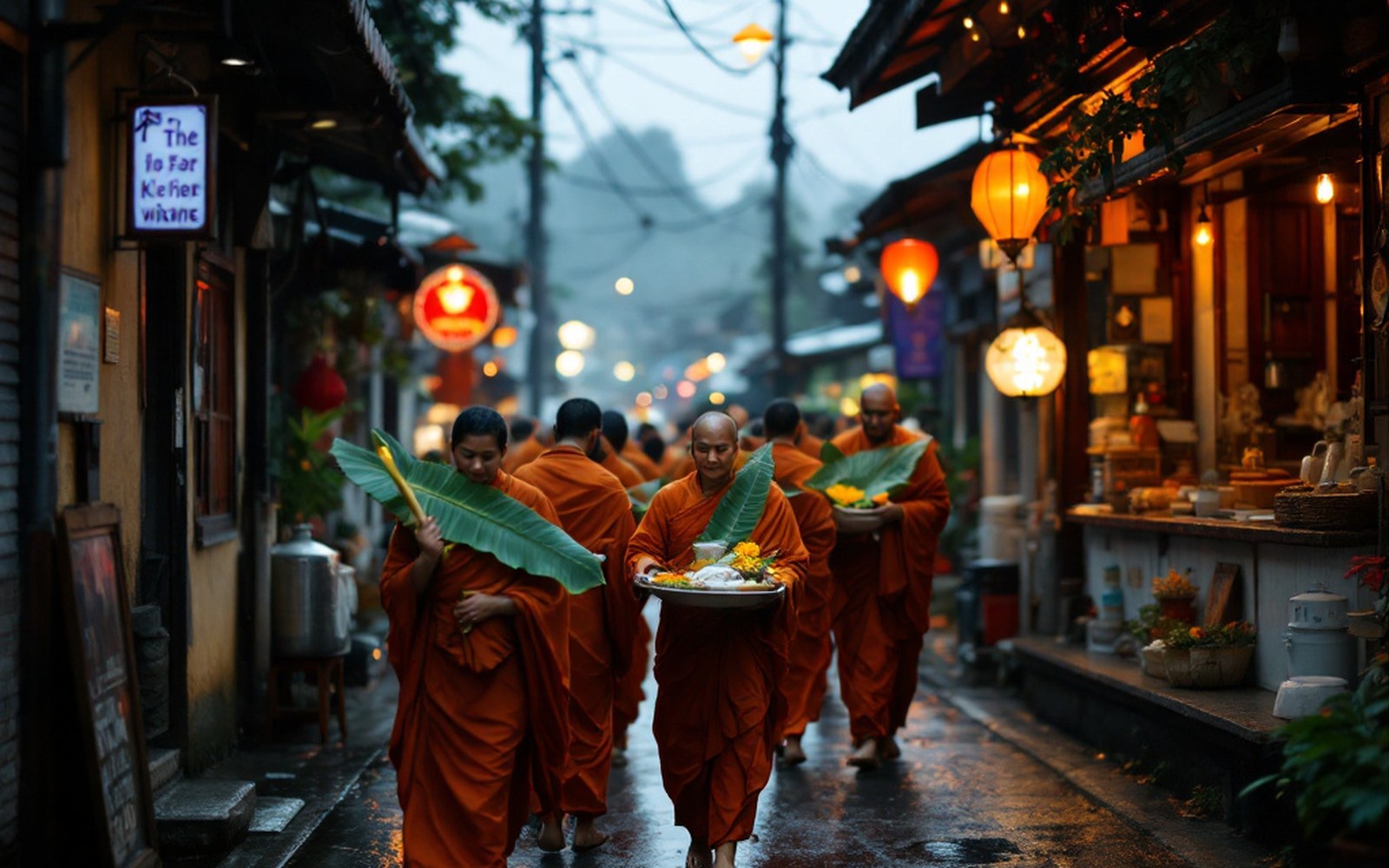
The festival in question is Asanha Bucha, which falls on the full moon of the eighth lunar month — landing in July or August by the Gregorian calendar, depending on the year. The following morning begins Khao Phansa, the start of the rains retreat, when the monastic community withdraws to a single temple for three months. Asanha Bucha itself commemorates the first sermon the Buddha delivered after his enlightenment: the Dhammacakkappavattana Sutta, addressed to five ascetics at a deer park near Varanasi. It is a doctrinal commemoration, not a seasonal or agricultural one.
Water appears at some community events around this period because the rains retreat is about to begin and monks may perform a blessing before entering seclusion. Some communities carry candles in procession; the candle is the offering that stays behind at the temple once the retreat opens. But the water here is incidental to the event, not the point of it — and nothing in Asanha Bucha corresponds to the new-year symbolism that drives Songkran's ritual washing. Songkran, which falls at the traditional solar new year in mid-April, is built around transition: the old year passing, the new one beginning, merit made by pouring water over sacred images and the hands of elders.
The mistake tends to happen because some Thai-Canadian community calendars compress several events into a single summer gathering, and a newcomer watching the whole day sees water and assumes the logic is the same. It is not. The occasions that use water do so for different reasons, on different grounds, and on a different part of the lunar calendar altogether.
Asanha Bucha is a public holiday in Thailand. In Vancouver, it is generally observed at temple rather than in a public park, and the character of the day — quieter, more inward — reflects what it actually is: the eve of a long withdrawal, not a celebration of renewal. The monks will stay put for three months. The day before that begins is worth understanding on its own terms.
More in April, and everything gets wet