FrontKhao Phansa, and staying put
Khao Phansa, and staying put
The rains retreat sets a fixed point in the Buddhist year — three months when the monastic community does not travel, and the lay calendar quietly reorders itself around that fact.
What Khao Phansa actually is
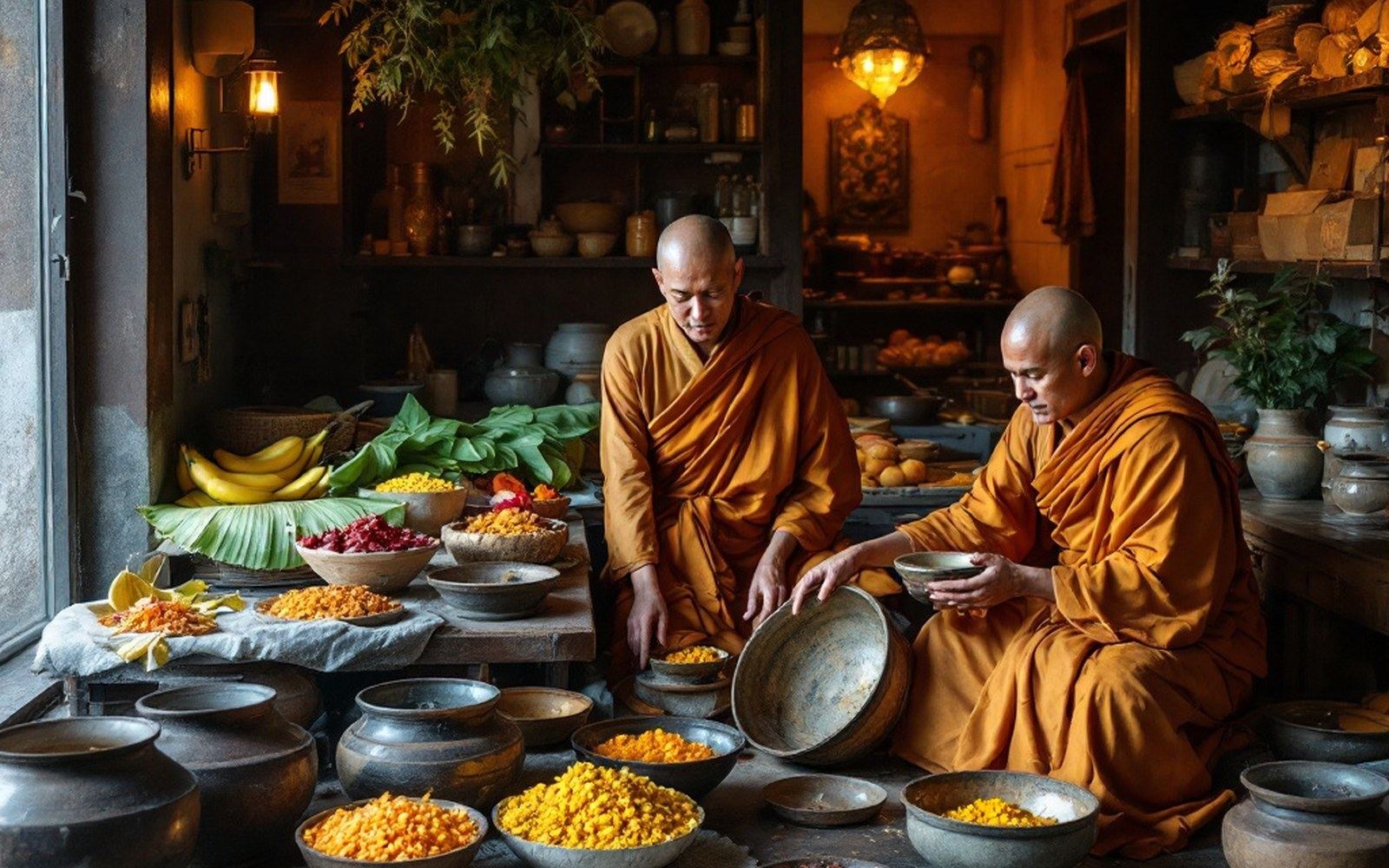
The word phansa — from the Pali vassa, meaning rain — names the period of the rains retreat that the Theravada Buddhist calendar has observed for roughly two and a half millennia. The rule is ancient and practical: during the monsoon growing season, monastics remain in a single wat (temple) rather than walking the countryside, where wandering feet might damage young rice shoots and small creatures sheltering in wet ground. The earliest account of this restriction appears in the Vinaya Pitaka, the portion of the Pali Canon that governs monastic discipline. Whatever its agricultural origins, what the retreat became over centuries is a season of intensified study, meditation and teaching — three months in which the monastery turns inward and the community outside it adjusts accordingly.
Khao Phansa is the day the retreat begins. It falls on the first day of the waning moon of the eighth lunar month — usually in July by the Gregorian calendar, though the precise date shifts year to year because the Thai calendar is lunar, and intercalary adjustments mean it does not land on the same Gregorian date twice running. The retreat runs for three months and closes on Ok Phansa, the full moon of the eleventh lunar month, typically in October.
Three months, one place
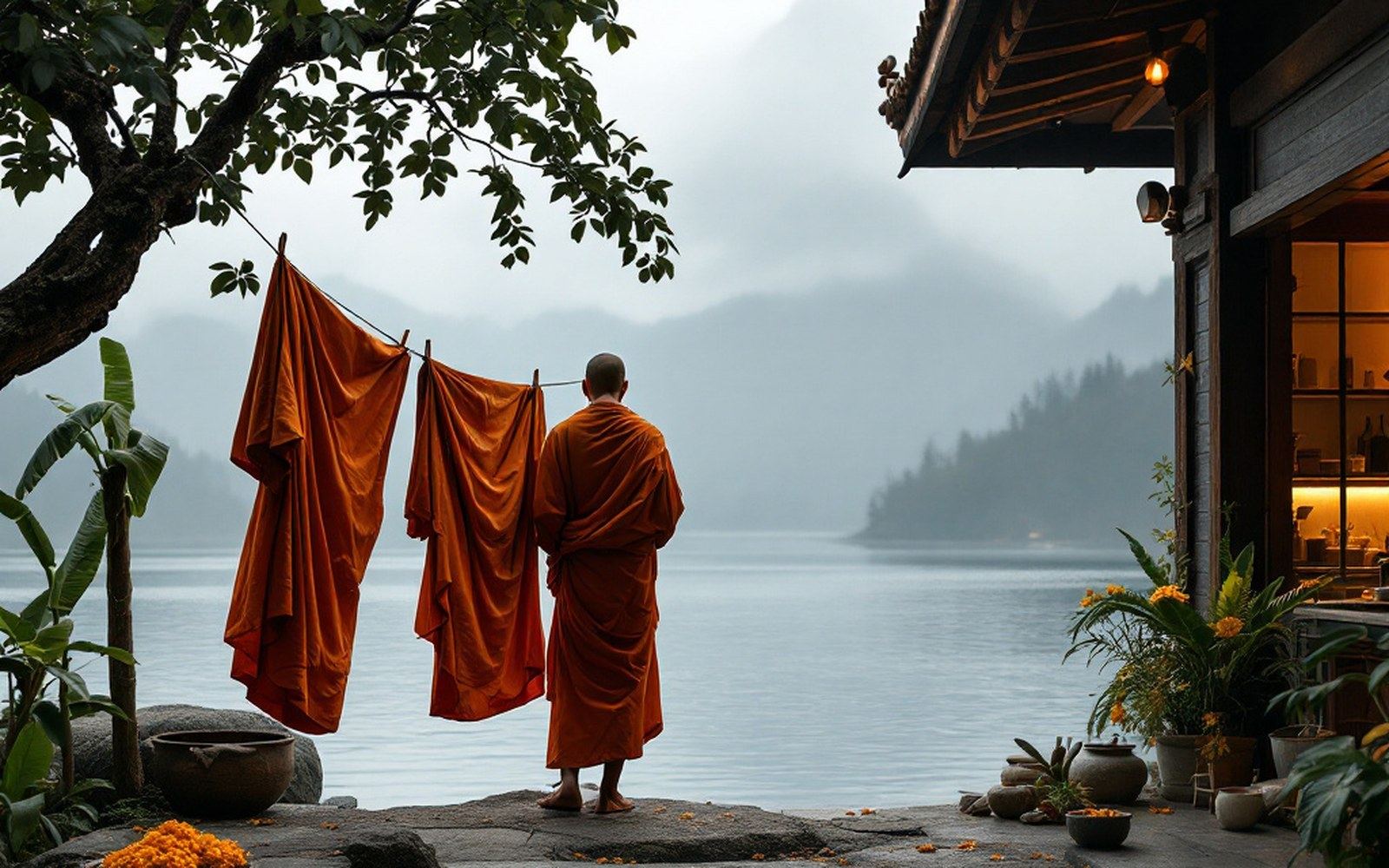
What Khao Phansa sets in motion inside a temple is a committed, continuous residence. Monks who might otherwise travel for teaching or family obligations take a formal vow to remain in their wat for the full retreat — breaking that vow is considered a serious breach of the Vinaya. There are narrow exceptions, documented in the texts: a monk may leave for up to seven days if a family member is gravely ill or if the temple community itself requires it, but the spirit of the rule is stillness, and departure is understood as the exception rather than the rhythm.
That stillness has always been legible to the lay community outside the walls. In Thailand the period corresponds broadly to the agricultural calendar — historically the planting season, when farming families were themselves tied to their land. The convergence of monastic and rural immobility gave Phansa a social coherence that outlasted the farming patterns that shaped it. Today the retreat is still observed by the Theravada communities of Thailand, Laos, Cambodia, Myanmar and Sri Lanka, and the social customs that grew up around it travel with those communities wherever they go.
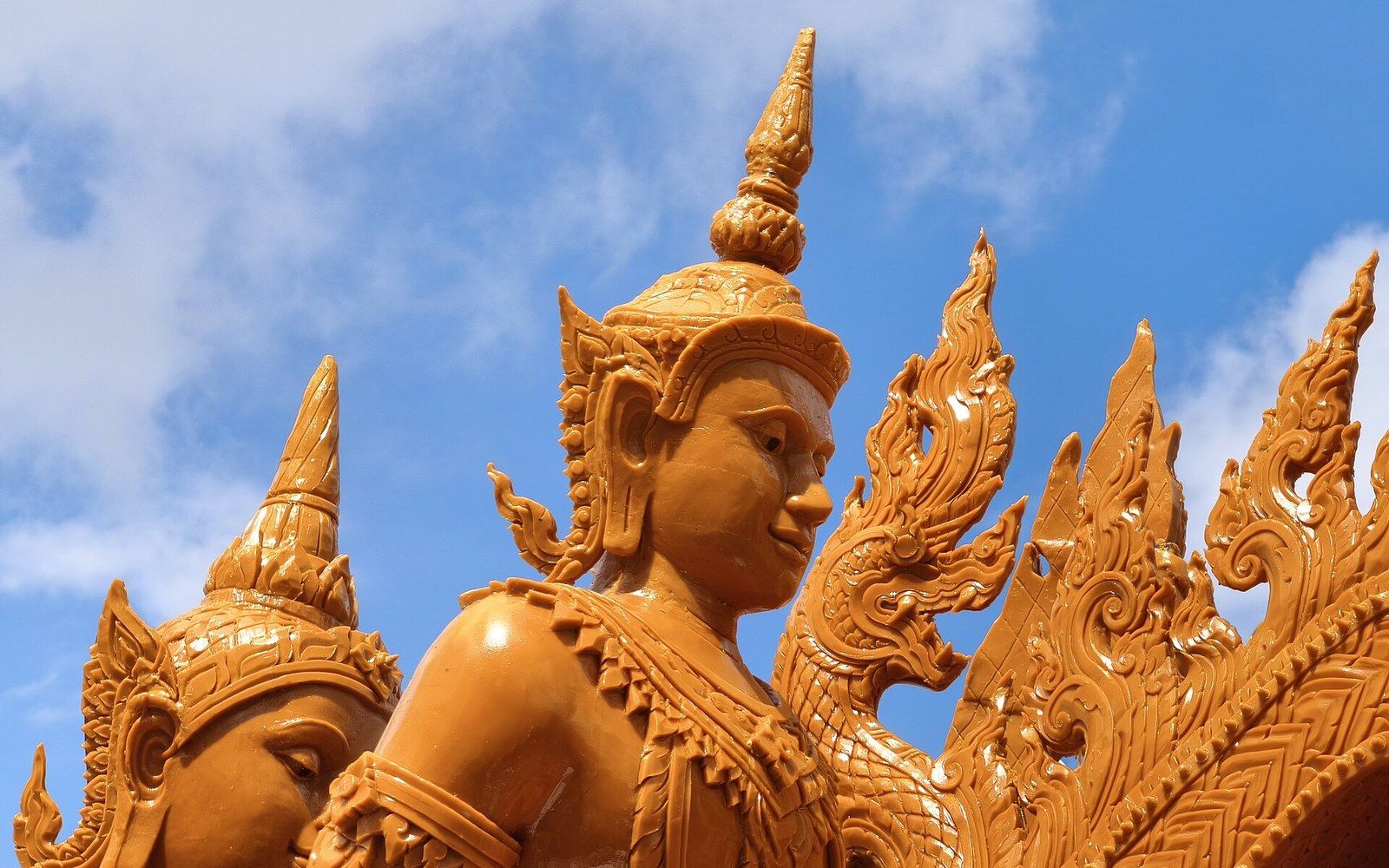
In Thai Buddhist tradition, Khao Phansa is also associated with the candle festivals held in temple courtyards and city streets on the eve of the retreat — the most elaborate being the Ubon Ratchathani Candle Festival in the northeast, where enormous carved beeswax sculptures are paraded before being installed in temples to burn throughout the season. The candle is not decorative. A flame that lasts three months is the point: light, sustained, for the duration.
How the lay year reorganises
The retreat creates a kind of gravitational pull on the calendar around it. Traditionally, Thai Buddhists do not hold elaborate weddings during Phansa — monks cannot easily travel to bless a ceremony, and a celebration that draws a community away from the temple sits awkwardly against the season's tone. The custom is not universal law and it is observed to varying degrees, but it is real, and families planning events in Vancouver's Thai community know it. A wedding scheduled in August or September will sometimes get a quiet raised eyebrow from older relatives.
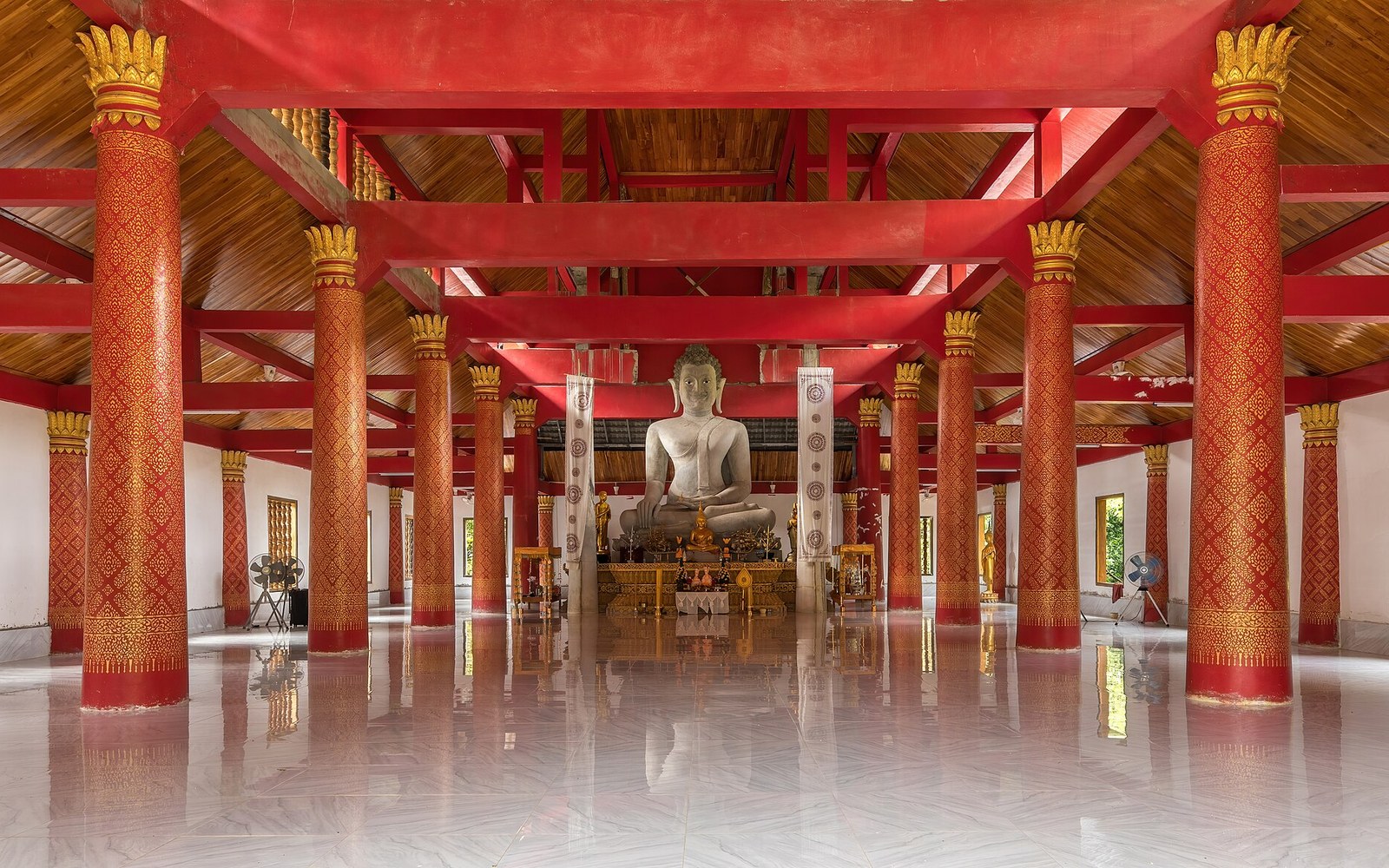
More visibly, the period is when uposatha observance intensifies. Uposatha days — the new and full moon days on which laypeople may take eight precepts, attend temple and offer food to monastics — carry particular weight during Phansa. At temples in the Lower Mainland, the retreat months typically see more consistent attendance at the fortnightly observance days. The period is also when some lay Buddhists choose to undertake their own commitments: abstaining from alcohol, maintaining a stricter diet, or spending more time in study.
What the retreat does not mean, and this matters, is that the temple is closed to outsiders or that lay life goes on hold. Temple doors stay open. Merit-making — offering food, candles, flowers and robes — continues and in some ways intensifies, because the monastic community is reliably present. If anything, Khao Phansa is the best time to encounter a working Thai temple at full practice, because you know the community will be there.
Keeping it in Vancouver
Vancouver's Thai community is small relative to the city's broader population, and its temples — both in Vancouver and in areas like Richmond and Surrey — are modest in scale compared with the large wats of Chiang Mai or Bangkok. What is observed here is kept faithfully but adapted to a working week and to a community that is scattered across the region rather than clustered around a single neighbourhood.
The retreat itself is not adapted — monks who have taken the Phansa vow keep it regardless of geography. But the lay engagement with the season takes a Canadian shape: observance days fall when they fall, but community gatherings are often shifted to the nearest weekend. The candle procession that marks the opening of the retreat, so central to the Isan tradition and to the ceremony in Ubon Ratchathani, lives in a smaller form here — but it lives.
Food, which is always part of the temple economy, takes on a particular character during Phansa. The tradition of offering morning alms and of bringing prepared food to the wat for community meals is one of the principal ways lay supporters engage with a retreating community. In Vancouver, what a kitchen can actually source shapes what gets cooked — galangal and makrut lime are available, banana blossom and fresh holy basil more intermittently — and the cooks who bring food to temple know this terrain well.
Theravada Buddhism, as documented by scholars of Southeast Asian religious practice, places the Vinaya at the centre of monastic life, and the rains retreat is among the Vinaya's clearest annual expressions. For the lay community, Phansa is not a season of withdrawal so much as a season of orientation — a fixed point in a year that otherwise moves fast, three months when the monastery is reliably in one place, and the community knows where to find it.
More in Khao Phansa, and staying put