The Thai year is counted in moons, and it does not line up with this one
Two calendars running simultaneously explain why the same festival lands in a different week every year, and why a date printed on a Thai temple flyer rarely matches the one in a Canadian planner.
A year that breathes
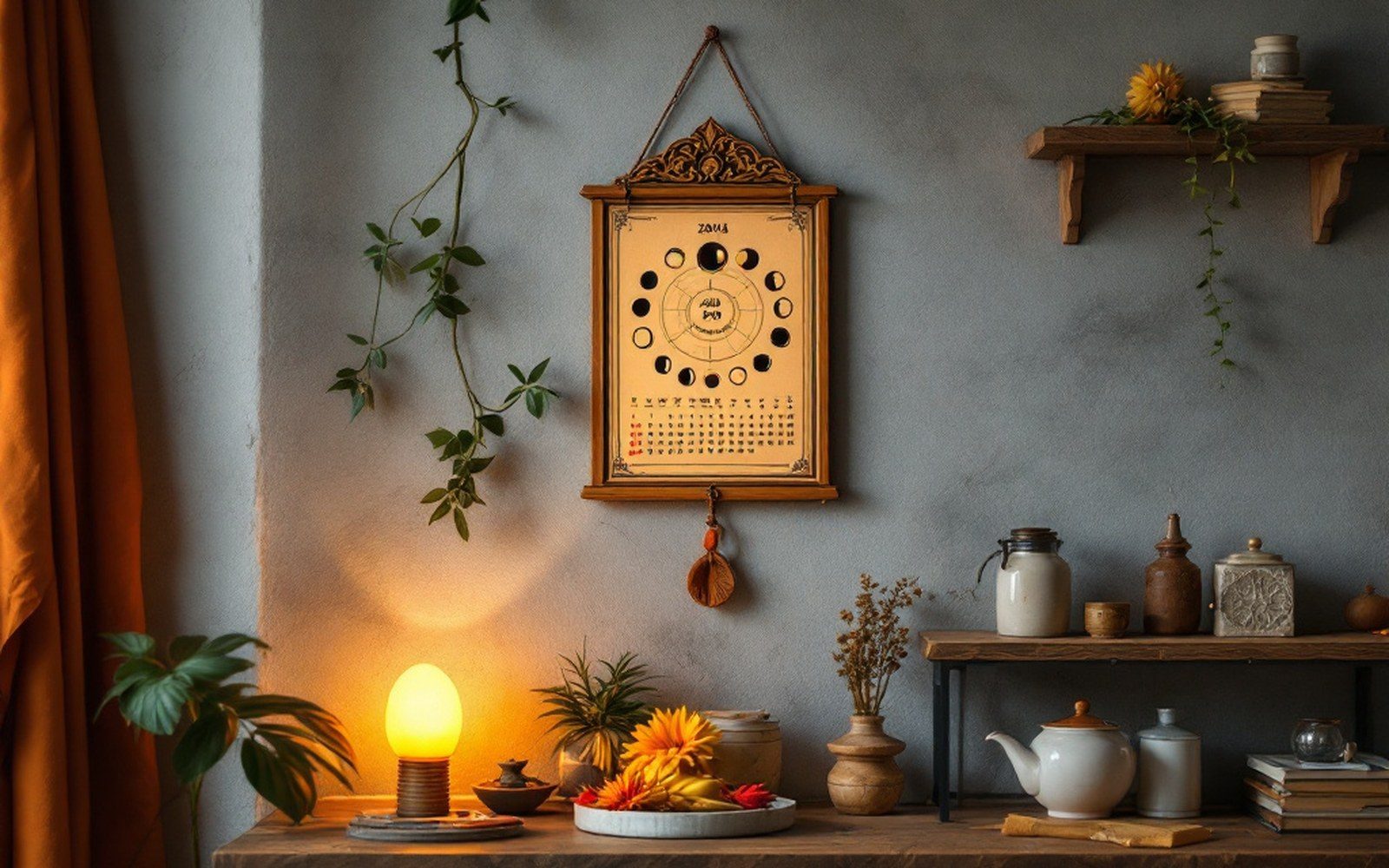
The calendar that governs Thai Buddhist observance is lunisolar: months are measured by the moon's cycle, but a periodic adjustment keeps the whole system from drifting too far from the solar year. A synodic month — new moon to new moon — runs roughly 29.5 days, so twelve of them add up to about 354 days, eleven short of the Gregorian year. Left alone, a purely lunar calendar would migrate backward through the solar year by about that margin annually, and the festivals would arrive in a different season within a generation. The Thai system corrects this by inserting an intercalary month, a thirteenth month, in certain years — roughly seven times every nineteen years, following a traditional cycle. The intercalary month is always a second eighth month, Adhikamās in Sanskrit-derived nomenclature, inserted between the normal eighth and ninth months of the Thai lunar reckoning.
This is the first place confusion enters a Western calendar user. The Gregorian year has a fixed length — 365 days, 366 in a leap year — and its months are administrative units with no relationship to the moon's actual position. When a Thai temple announces that Visakha Bucha (the full moon observance commemorating the birth, enlightenment and passing of the Buddha) falls on a particular date, that date shifts every Gregorian year because it is always the fifteenth day of the sixth Thai lunar month, whenever that full moon happens to land. In some years it is in May; in others it slips into June. The moon does not renegotiate.
The Thai year count itself adds another layer. The Buddhist Era (BE) calendar, used on all formal and religious documents in Thailand, counts from the year of the Buddha's passing, accepted in the Theravāda tradition as 543 BCE. The year 2025 CE is therefore BE 2568 — a number that regularly startles Canadians encountering Thai paperwork for the first time. It is not a typo and not a different document; it is a different epoch, running in parallel with the same solar year length the Gregorian calendar uses.
The festivals and the fault line
Because the major observances are anchored to lunar full moons, each one floats within a window of Gregorian weeks. Khao Phansa — the start of the rains retreat, when the monastic community commits to remaining in one monastery for three months — falls on the first day after the full moon of the eighth lunar month. In intercalary years it falls instead after the full moon of the second eighth month, pushing it roughly a month later in Gregorian terms. Ok Phansa, which closes the retreat exactly three lunar months on, moves with it. A community planning an event around Ok Phansa in an intercalary year and working from the previous year's Gregorian date will arrive several weeks early.
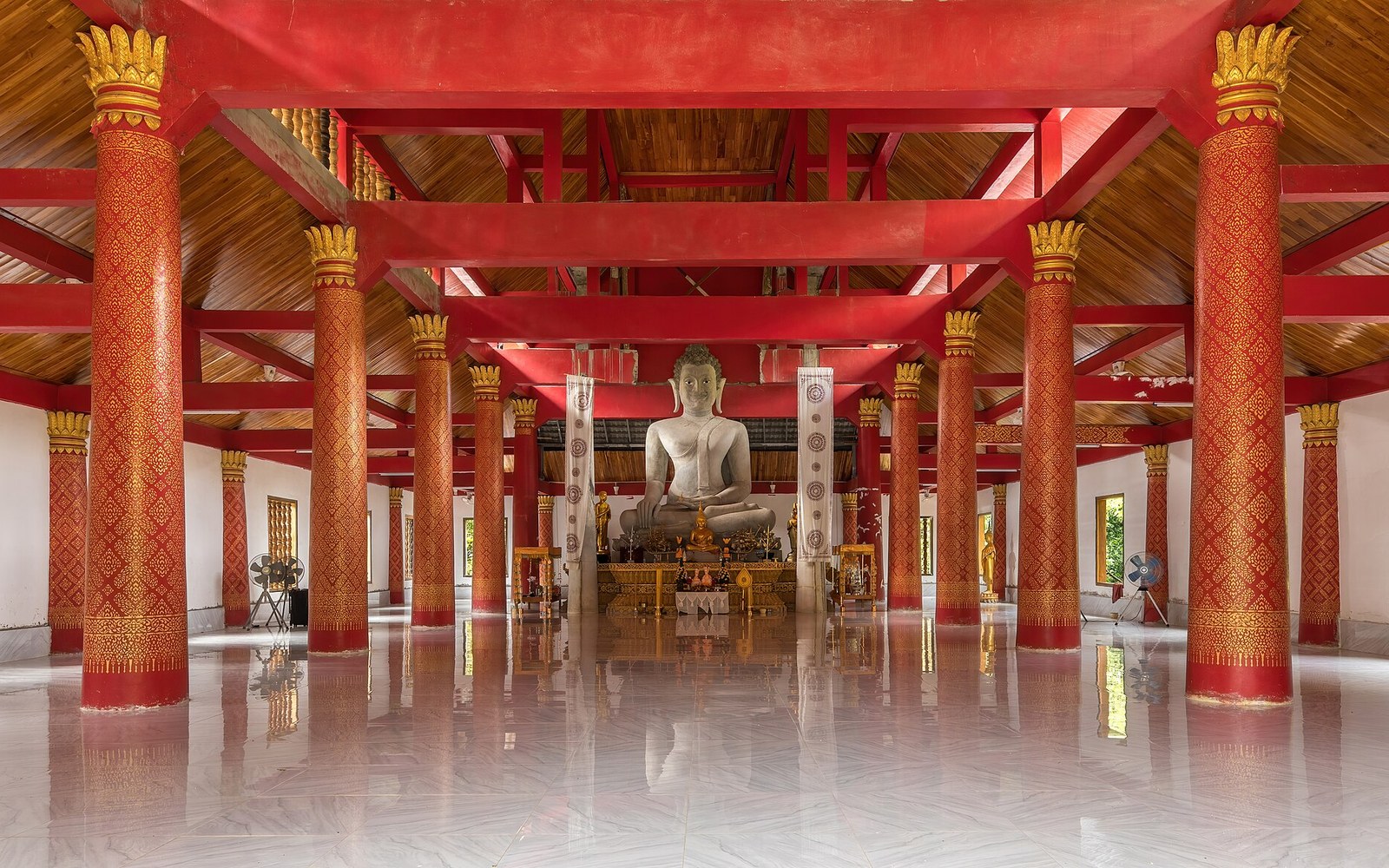
Uposatha days — the observance days that structure the monastic week — are set by the moon's quarter phases: new moon, first quarter, full moon, third quarter. They occur approximately every seven days, but the gap is not fixed, because the lunar cycle is not exactly divisible by seven. A monk's uposatha falls when the moon dictates, not on a Sunday. For a community in Vancouver observing these days, the practical consequence is that the dates must be recalculated every month from a Thai lunar almanac rather than read off a fixed Western schedule.
Songkran, the Thai new year water festival, is the prominent exception in this landscape: it is fixed in the solar calendar at 13–15 April by royal decree, a reform that locked the date for practical reasons in the twentieth century. But the water poured during Songkran still carries its older lunar logic — the rite of pouring water over Buddha images and over the hands of elders belongs to a tradition of marking transition, of washing away the old year, that predates the solar fix. The calendar reform changed the date; it did not change what the water is for.
Loy Krathong sits at the opposite end of the year: full moon of the twelfth lunar month, almost always falling in November by Gregorian reckoning. Its floating quality is relatively gentle — it tends to move within a span of two or three Gregorian weeks across years — but in intercalary years the whole rear end of the Thai lunar year is pushed forward, and Loy Krathong can land unusually late. The festival's anchor is not a month name but a moon: the float goes out when the water is full, and the water is full when the moon says so.
What this means for a calendar kept in Vancouver
A Thai temple in Vancouver — and the Lower Mainland community draws from across the city into Richmond and Surrey — does not have the luxury of Thailand's broadly shared liturgical infrastructure. There is no national broadcast of the exact date, no street-level reminder that the eighth month's full moon arrived last night. The date is worked out from the Thai almanac, cross-checked against observatories' published lunar phase data, and then translated into a Gregorian date that Canadian-born family members can put in a phone. That translation is done every year, for every observance, from scratch.
The arithmetic is not difficult but it is unforgiving. The lunar phase tables published by NASA's Jet Propulsion Laboratory and other observational sources give precise times for each phase in UTC; converting to Bangkok's UTC+7 and then to Vancouver's UTC−7 or UTC−8 (depending on whether daylight saving is in effect) means a full moon that the Thai almanac places on a Thursday evening in Bangkok is, in Vancouver, an early Thursday morning — and one that falls in Bangkok's small hours lands on the previous day in Vancouver. Which day the community observes is a matter of local temple decision, and different temples in the same city can and do land on different days.
The gap between the Thai lunar calendar and the Gregorian one is not a problem to be solved; it is a structural feature of a system that was designed around a different conception of time. The Gregorian calendar treats the year as an administrative container of fixed length. The Thai Buddhist calendar treats it as a cycle of lunar phases embedded in a solar rhythm, adjusted periodically to keep festivals in their seasons and the moon in its proper place above the water. The floats go out on the full moon because the full moon is the point: the date is a consequence of the observance, not the other way around.
More in Counted in moons