And in Vancouver
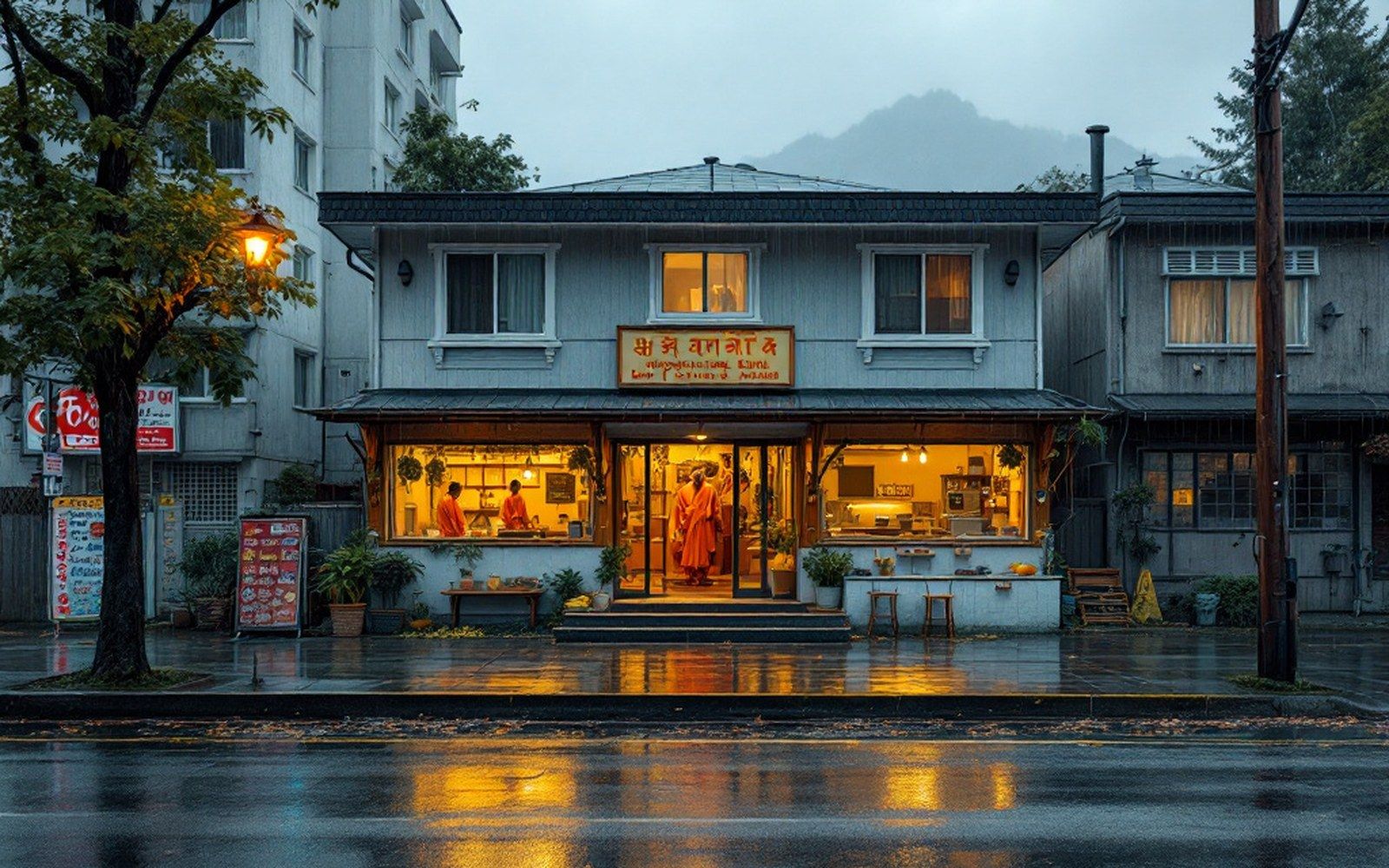
A community that keeps its own time
The Thai calendar does not belong to any particular climate. It was built in mainland Southeast Asia around monsoon seasons and a lunar rhythm that has been running, by most scholarly reckoning, for well over a thousand years. When Thai families settled in Greater Vancouver — in Richmond, in Surrey, in the neighbourhoods of the city itself — they brought that calendar with them, and it continues to run here, slightly out of phase with almost everything around it.
The community is not large. Thai-born residents in British Columbia number in the thousands, not the tens of thousands, and the social world they maintain is correspondingly intimate. Word travels fast, obligations are remembered, and the handful of temples in the Lower Mainland carry a weight that a city with dozens of Buddhist institutions might spread more thinly. The central place in that world is Wat Buddhananachat, the Thai Theravada temple established in the Lower Mainland that functions as the practical anchor for the festival year — the site of merit-making at uposatha observances, of robes offered at Ok Phansa, of the alms round that marks Visakha Bucha. For a community this size, the temple is not one option among several. It is where things happen.
How the calendar bends to the working week
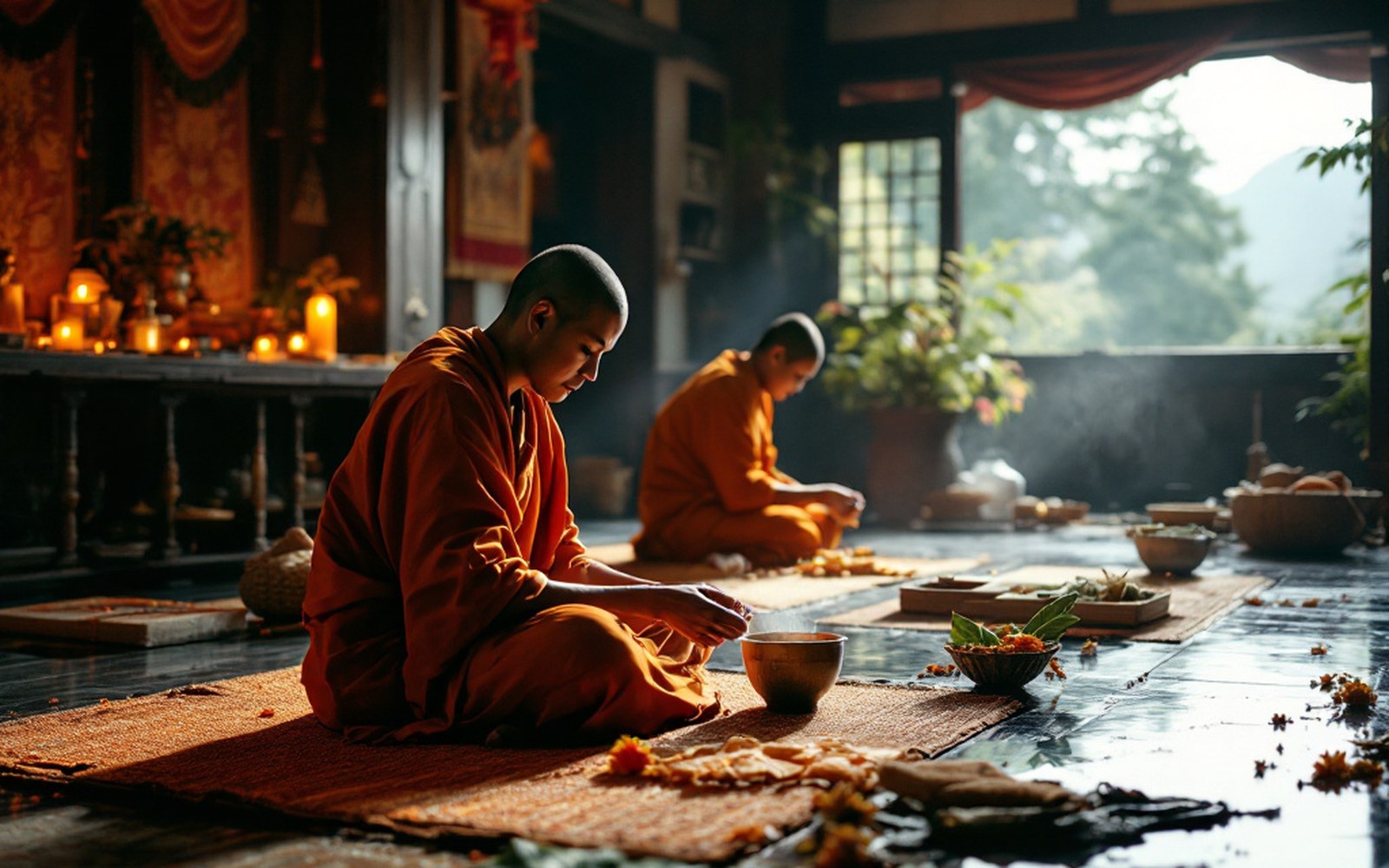
What the calendar requires and what Canadian employment allows are two different things, and the community has long since learned to negotiate the gap. In Thailand, a full-moon observance might occupy a weekday with no particular friction — shops close, offices thin out, the rhythm of the country adjusts. In Vancouver, a Tuesday full moon means most people cannot be at the temple until the weekend. The practical solution is one that the Thai-Canadian community shares with Thai communities in other diaspora cities: the observance date is honoured liturgically, and the gathering is scheduled for the nearest Saturday or Sunday.
This compression and shifting of dates means that a single festival can appear to fall on several different weekends depending on which community, which temple, and which reading of the lunar calendar a family follows — a dispersal that is not confusion but adaptation. The same festival across four different weeks is not a breakdown of tradition; it is tradition working around the constraints it has actually been given.
Khao Phansa, the opening of the rains retreat, falls at the full moon of the eighth lunar month — in the Gregorian calendar, this lands in July. For three months following it, the monastic community remains in one place, and the laity's relationship to the temple intensifies. In Vancouver, that intensification looks different from what it looks like in Chiang Mai or in the Isan villages that many families trace their roots to. The gap between a monastic timetable and a Canadian working life is simply wider. What does not change is the obligation that serious practitioners feel, and the care with which the abbot's calendar is followed even when attending requires real logistical effort.
Songkran in April, on a lawn in the Lower Mainland
Songkran arrives in mid-April, and the water — in the Southeast Asian original — is inseparable from what it is actually for: poured over Buddha images, offered over the hands of elders as an act of respect and blessing, the physical form of a new year's cleansing. In Bangkok, this has grown into something vast and noisy; in Chiang Mai, the moat runs with water for days. In Vancouver, April means something else entirely. The weather in mid-April in the Lower Mainland is cool and frequently wet without any assistance from participants, which gives outdoor water celebrations an improvisational quality that their Thai counterparts, conducted in thirty-degree heat, do not share.
The community events that gather around Songkran in Greater Vancouver are genuinely festive — food stalls, traditional dress, a lot of children who find the water elements immediately comprehensible regardless of their age — but the temple observance at their centre is quieter and more specific. The pouring of water over the hands of elders is not a street-party element; it is a family practice, and it happens before the public festivities begin. Families who have not been to the temple since Ok Phansa make the effort. The merit-making dimension of the day is understood even by members of the community who have grown up largely in Canada and whose Thai may be thinner than their grandparents would prefer.
Loy Krathong and November light
November brings Loy Krathong, the full-moon festival of the twelfth lunar month, in which a krathong — a small float, traditionally made from a cross-section of banana trunk, dressed with folded banana leaves, flowers, incense and a candle — is set onto water. The purpose is layered: gratitude to the water, release of the year's accumulated grievances, an offering that floats away carrying what you no longer need. The banana-trunk float, biodegradable and traditional, has largely given way in Thailand to styrofoam versions, and the environmental argument against those has changed what krathong are made of. Vancouver practitioners, many of whom arrived after that argument was already well advanced in Thailand, tend toward materials they know will break down: banana leaves are available from the grocers in Richmond, and what a grocer in this city can actually source for a festival has expanded considerably in recent years.
The bodies of water in the Lower Mainland are cold in November and do not invite wading. Loy Krathong here happens at ponds, at the edge of the Fraser, in temple grounds where a temporary basin serves the purpose. The image — candlelight on dark water, the float rocking gently outward — is unchanged by latitude. It is still a night observance, still the twelfth-month full moon, still the same gesture of letting go that the festival has described for centuries. The earliest accounts of Loy Krathong as a formal observance place it in the Sukhothai period, though the practice of floating offerings on water is certainly older than any royal sponsorship.
The festival year in Vancouver is, in the end, a smaller version of the same year that runs in Thailand — compressed, rescheduled, conducted in a climate that requires a coat in November and optimism in April. What keeps it coherent is not the weather or the working week. It is the temple, the lunar calendar, and the community that chose to bring both with them.
More in And in Vancouver