FrontApril, and everything gets wet
The bowl, the order it goes in
Water is the medium; sequence is the message. At a Songkran observance, who receives water when, and from whom, carries the whole meaning of the day.
Images before elders
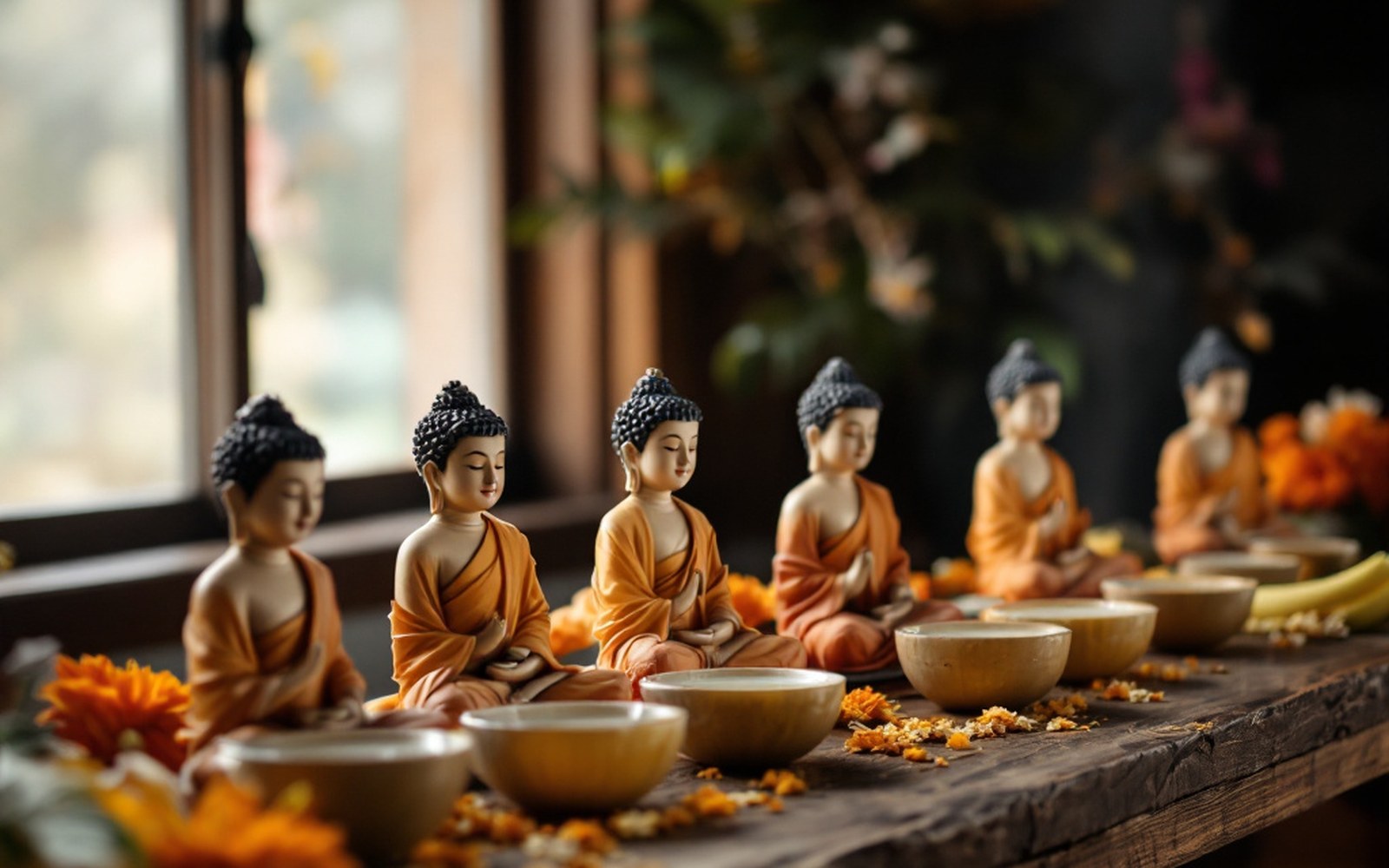
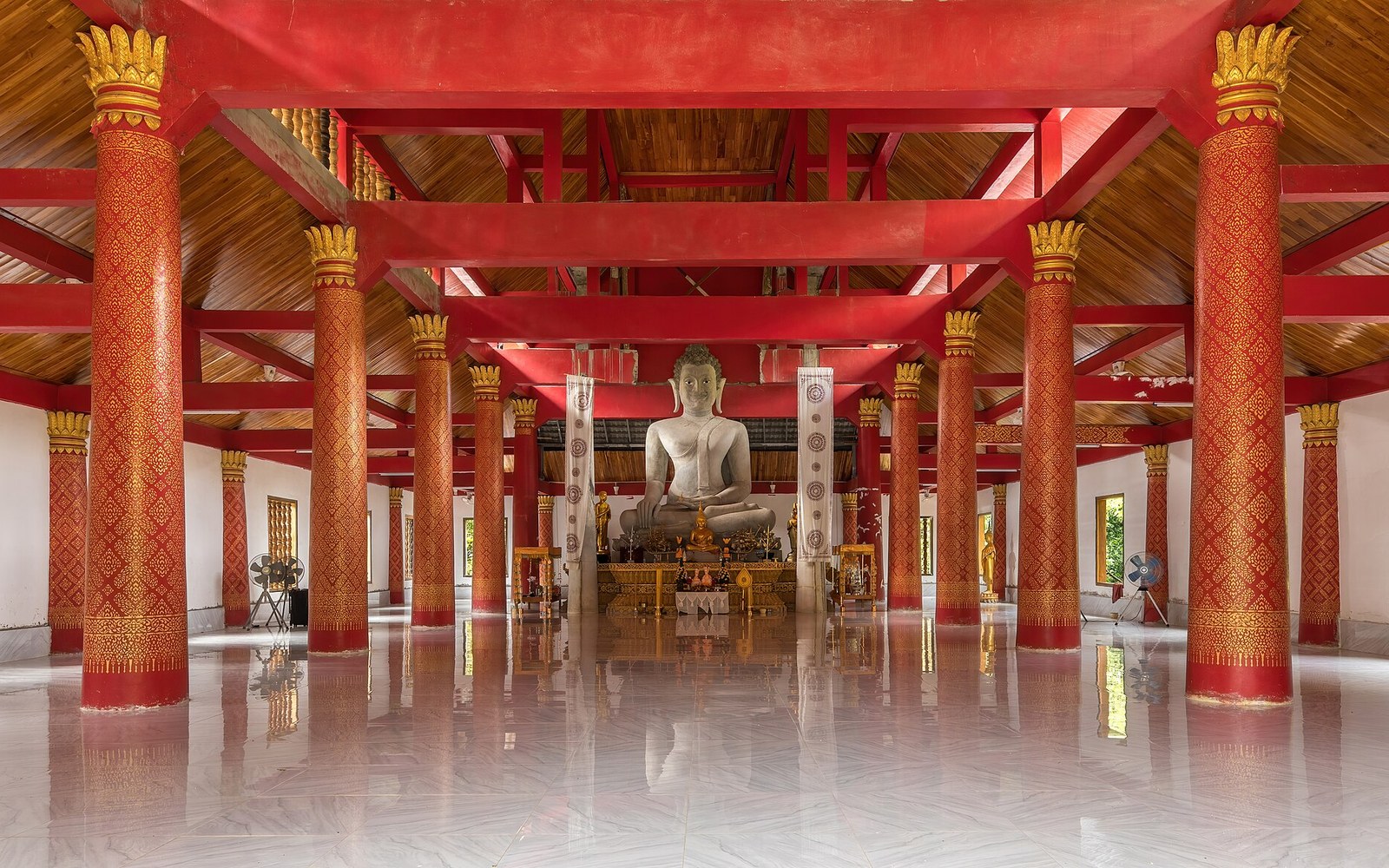
The sequence at a proper Songkran observance is not complicated, but it is fixed, and it is not posted on a sign at the door. Water goes first to Buddha images — poured over the image, not splashed, collected in the basin below and understood as merit made before the social portion of the ceremony begins. In temple settings around Vancouver this typically happens in the shrine hall, the image already arranged on a low platform so that the water runs off cleanly. The act is quiet and deliberate. There is nothing festive about it yet; that register comes later.
Only after the images have been attended to does the water move to the living. The eldest person present — a senior monk if the setting is a temple, a grandparent if the occasion is a household one — receives first. Younger people approach, cup both hands, and pour a small stream of scented water over the elder's wrists and hands. The elder may offer a blessing in return. The exchange is brief and the manner is restrained. It is, in its essentials, a request for the elder's goodwill carried forward through the coming year, and the water is its vehicle.
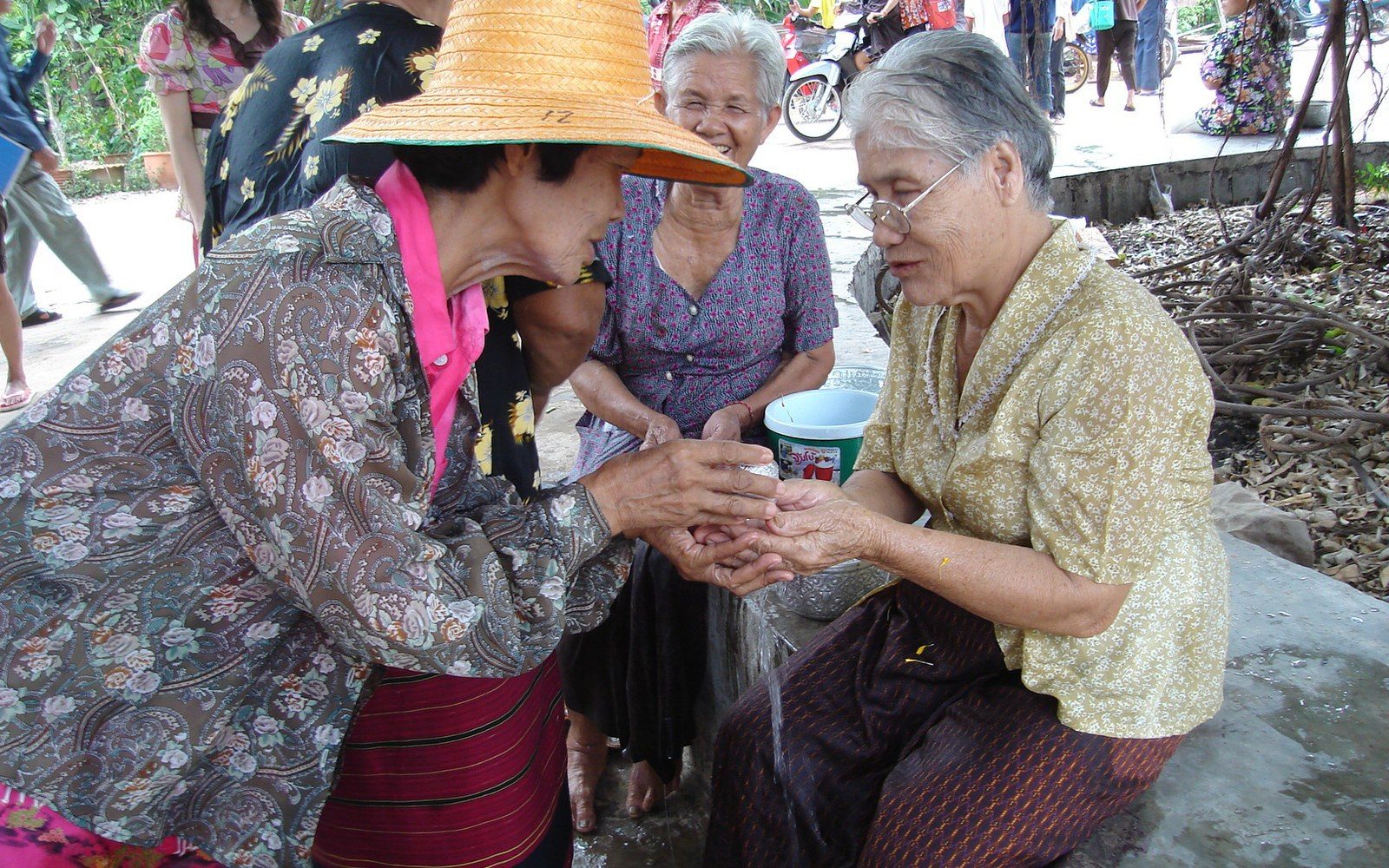
Then — and only then — does the direction of pouring broaden to include everyone else, working outward from the most senior to the least. Children receive water last. In a large gathering this takes time, because each exchange between younger and older is individual, not collective: one pair of hands pouring onto another pair.
What visitors get wrong
The commonest error, and the one most likely to go unforgiven without a word being said, is pouring water on someone before that person has poured on the elder ahead of them. Cut the sequence, and the meaning evaporates; what remains is just wet. A second error is using cold water or an excessive volume. The scented water used in formal Songkran — traditionally prepared with flowers and sometimes with fragrant woods — is applied in a narrow, controlled stream, not tipped from a bucket. The street festival in Bangkok's Silom Road or the water fights broadcast from Chiang Mai every April are a separate and much later layer of the holiday; they are not the ceremony. Treating the ceremony as a warm-up act for the outdoor soaking is the confusion visitors most often import.
Dress matters for the same reason. The ceremony happens indoors or in a temple courtyard before the outdoor celebration begins, and the clothing appropriate to that space is clean, modest and, in many communities, white or in the pastel-adjacent Thai festival palette. Arriving already wet suggests that a person has put the afternoon's outcome before the morning's observance.
Timing is the third trap. Songkran as the traditional Thai calendar calculates it falls in mid-April — historically the 13th through 15th — and the Thai civil year assigns April 13 as the anchor. In Canada, observances are almost always moved to a nearby weekend, which compresses the three-day arc into a single event. The image-bathing, the elder-pouring and the communal water exchange that would be spread across separate mornings in Bangkok or Ayutthaya are folded into a sequence that runs in a single late morning. Anyone who arrives after the midpoint has missed the ceremony and walked into the party.
The water that carries the year
Songkran is, at its structural core, a year-crossing ritual: the old year released, the new year invited, both managed through water applied in the right order to the right recipients. The sequence — images, elders, peers, juniors — is not etiquette layered over a water fight; it is the logic of the day expressed in a physical act. Every pour is directional. Every direction marks a relationship.
Thai communities in Richmond and Surrey, as anywhere the Thai diaspora has settled, keep this structure intact even when the event is abbreviated, even when the afternoon turns social and loud. The bowl and the order it goes in remain the frame. Everything else is decoration.
More in April, and everything gets wet