FrontLoy Krathong on a pond in November
What goes into a krathong, and what does not any more
The float was always meant to break down. What it is made of has changed as the consequences became visible.
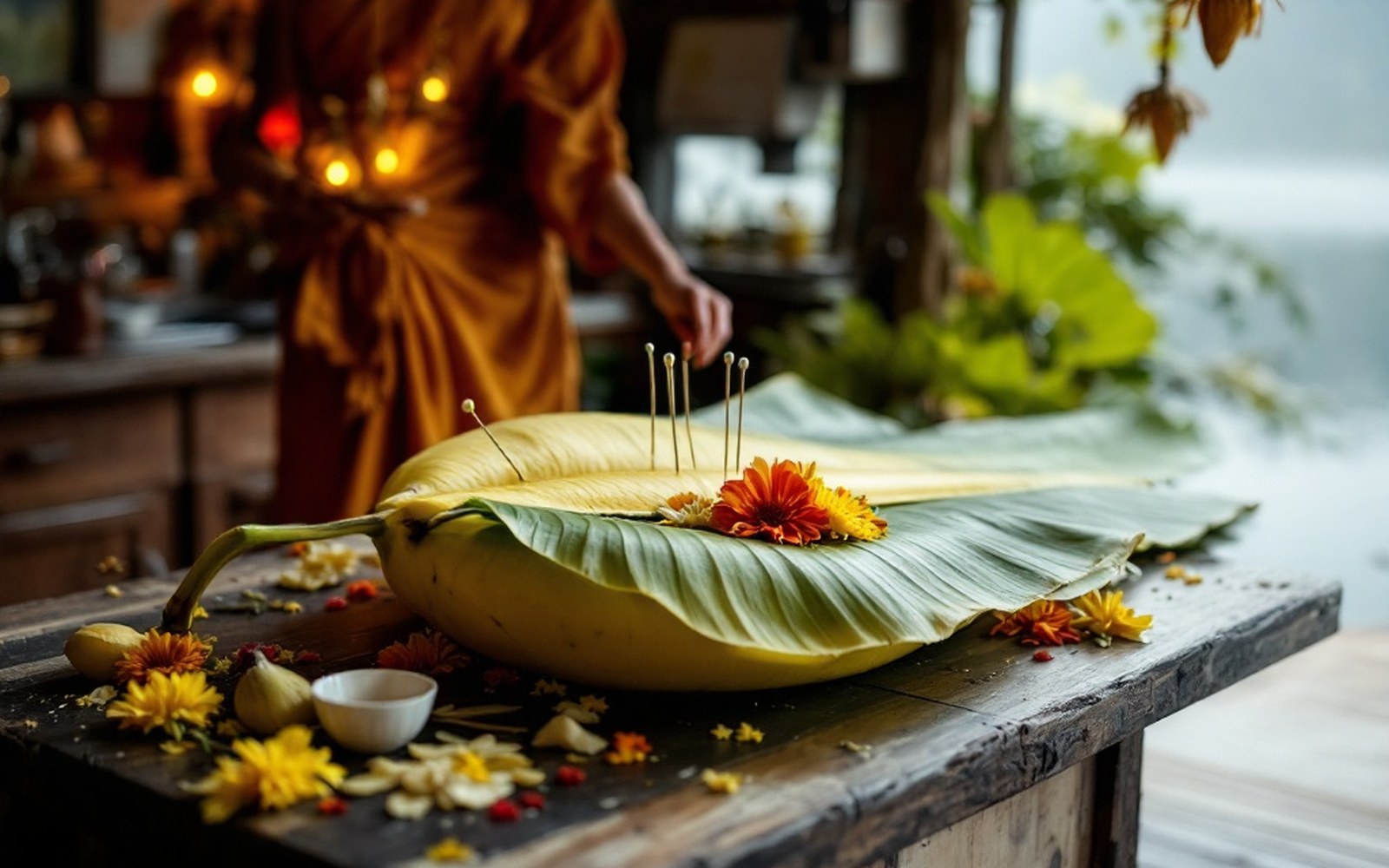
The traditional form
A krathong is a small float — built to be set on water and, eventually, to go under. The classic form is made from a cross-section of banana trunk, the dense, layered pith of the stem cut to a disc roughly the diameter of a tea saucer. Banana leaves are then folded and pinned to the top with slivers of bamboo, layered into a pattern that takes real practice to get right. Into this base go three incense sticks, a candle and a coin. The coin matters less than it once did; the incense and candle are the point. The float carries a small flame onto the water on the full moon of the twelfth lunar month — Loy Krathong, loy meaning "to float."
The materials are all organic and deliberately so. Banana trunk absorbs water and sinks within days; the leaves break down; even the bamboo pins dissolve into the riverbed. The logic of the float was built into its structure. It was never meant to persist.
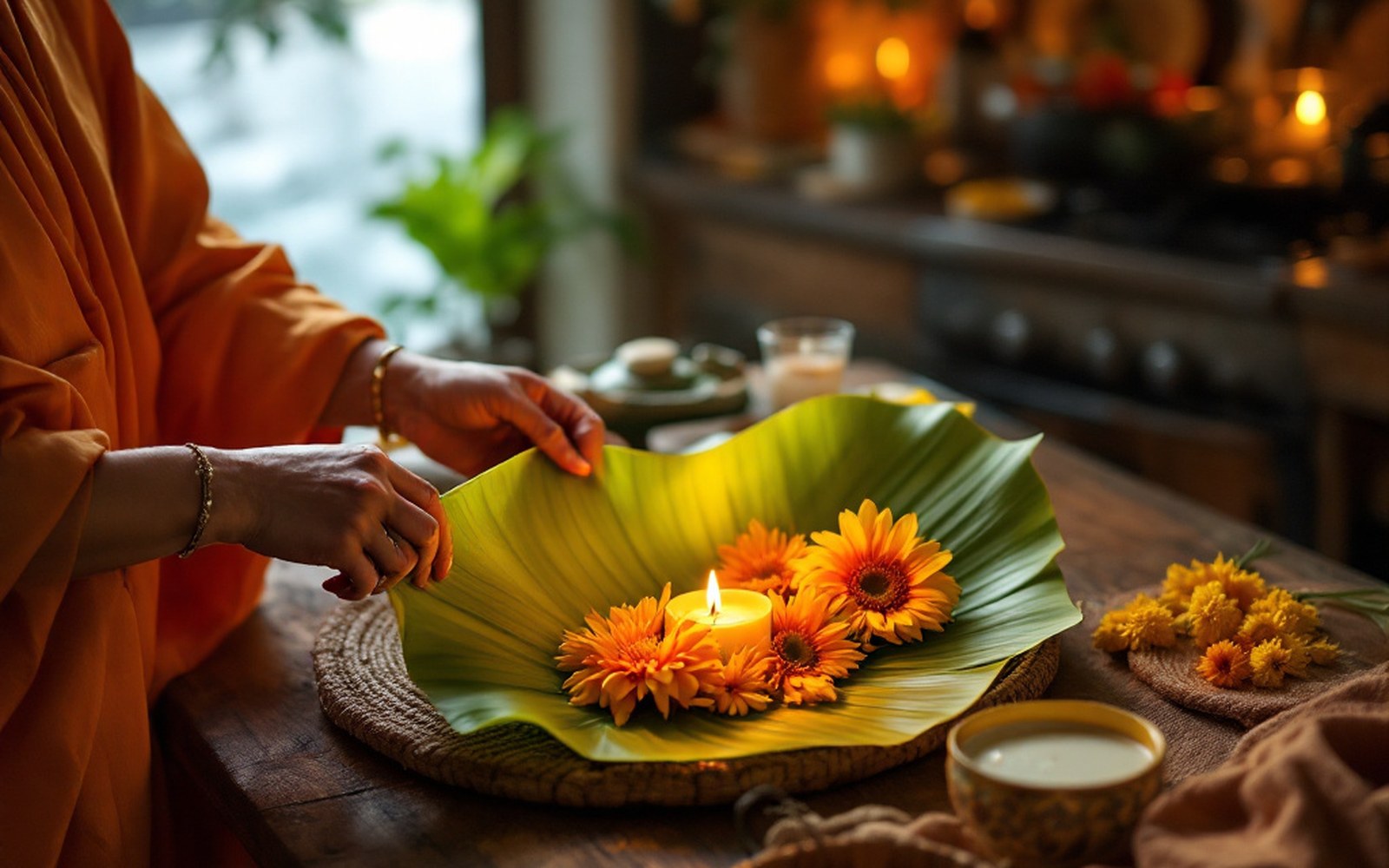
What changed was scale. When tens of thousands of krathong go onto the Chao Phraya in Bangkok on a single night, or onto the moat in Chiang Mai, the break-down time matters. The Ping River, the Mae Kha canal, the waterways around Ayutthaya — all of them recover what the night puts in, and over the past three decades the weight of that recovery has become measurable and visible.
What is in them now, and what has been removed
The shift started in the materials vendors use, particularly for the floats sold at markets rather than folded at home. Bread was adopted widely from the 1990s — a loaf cut to shape, pleasing to fish and genuinely biodegradable. Styrofoam, cheaper to ship and easier to stack, also entered the supply chain and stayed there longer than it should have. The consequences of Styrofoam on waterways are well documented in environmental literature: it fragments rather than breaking down, the beads enter the food chain, and no natural process eliminates it on a useful timescale.
Several Thai municipalities began restricting or banning Styrofoam krathong in the years after 2010, and Bangkok's city administration has repeatedly discouraged their sale ahead of the festival. The natural-materials standard — banana trunk, bread, dried flowers, beeswax candle — is now the stated norm, even if enforcement at individual market stalls is uneven. The Department of Environmental Quality Promotion has issued annual guidance around the festival promoting biodegradable materials, and some temples organise community retrieval of floats from the water at first light, separating organic matter from any synthetic additions before they degrade into the current.
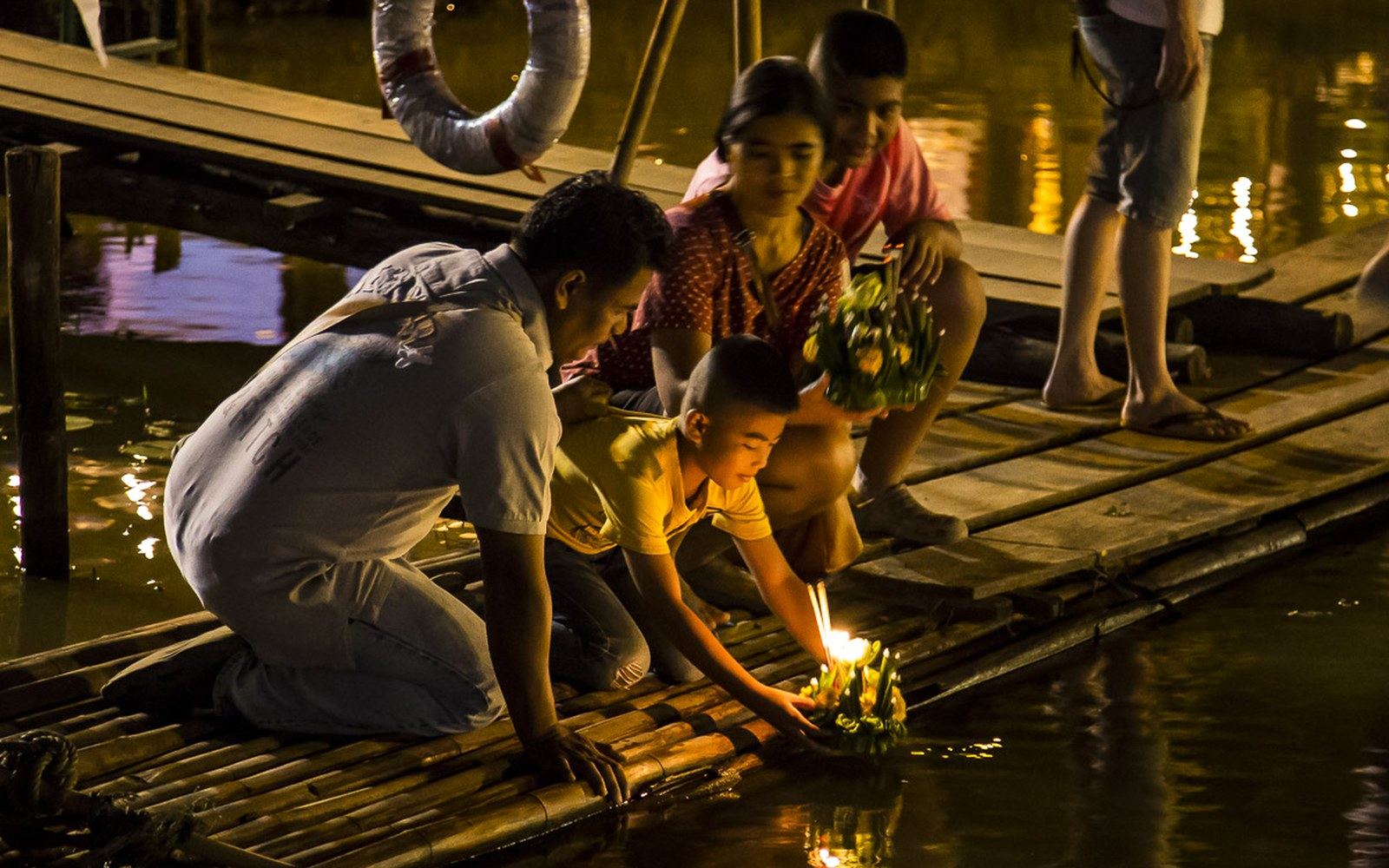
The decorative elements shifted too. Synthetic foam flowers were a quick substitute for the real banana-leaf folding, which takes time to learn. Real flowers — marigolds, jasmine, orchids, banana blossoms — have largely reasserted themselves at conscientious stalls, partly for environmental reasons and partly because the craft of the folded-leaf pattern has been kept alive through temple workshops and community events. Hair and nail clippings, sometimes placed inside as a symbolic release of the previous year's misfortunes, are human tissue and break down harmlessly; the tradition is old and presents no environmental problem.
What stays the same
What has not changed is the object's internal logic. It is built to leave the hand, to carry light a short distance across water and then to disappear. The incense, once lit, is consumed in minutes. The candle burns down or is extinguished by the water. The float itself should, given the right materials, be gone within a few days — unmistakably present on the night, and genuinely absent soon after.
The krathong made from bread with real flowers pinned to it and a beeswax taper at its centre is not a compromise version of the original. It is closer to what the original was: a small constructed thing, given to the water, that the water can actually take.
More in Loy Krathong on a pond in November